You hold more than one passport, you earn from anywhere, and you have no wish to emigrate in the full sense of the word. Maybe you have kept a residency in Paraguay or elsewhere for years and the renewals have started to feel like a second job. The idea of dropping it all and being tax resident nowhere is tempting.
The idea does not fail in a tax office. It fails at the bank. Every account you open, keep or move asks the same question, and the rules behind that question leave no room for an empty answer.
Can you not be a tax resident of any country?
On paper it can happen. Every country applies its own test, some count days, some look at your home, and a person who keeps no home anywhere and moves on before any count bites may meet none of them. That is the perpetual traveller model.
In practice the model breaks on paperwork long before any tax authority takes an interest. Banks and brokers need a residence to write down, and "none" is not one they can accept without asking hard questions. And the country you left may still treat you as its resident, because its own test is the one that counts for it.
Why the perpetual traveller model fails at the bank
Under the OECD's Common Reporting Standard, a bank must obtain a self-certification when you open an account: your name, residence address, jurisdiction or jurisdictions of residence for tax purposes, a TIN for each, and your date of birth, signed and dated. It must also confirm that the self-certification is reasonable against what it already knows about you.
The Commentary to the Standard is blunt about the gap a perpetual traveller leaves: failing to provide a jurisdiction of residence "is not an inconsequential error". The amended Commentary of 2023 goes further. A self-certification that shows no residence for tax purposes while the file holds an address "constitutes a reason to doubt" its validity; without a reasonable explanation the bank may not rely on it and must obtain a new one. There is no fallback to your address for individuals. The OECD's implementation handbook adds that jurisdictions may monitor and review account holders who have not indicated a tax residence.
So the honest answer on the form is a country, with a TIN, that the bank can believe. How the Philippine side of that file works: More on the residency certificate.
Can you be tax resident in two countries?
Yes. Because each country applies its own law, two of them can claim you at once. Tax treaties settle the conflict with a tie-breaker, a fixed order of tests. The France-Philippines treaty is a clear example. Under its article 4(2), a person resident in both states is treated as resident:
- •where they have a permanent home available;
- •if they have one in both, where their personal and economic ties are closer (the centre of vital interests);
- •failing that, where they habitually stay;
- •failing that, in the state of their nationality;
- •and otherwise, as the two tax authorities agree.
One caution: other treaties have their own wording, so read the one that applies to you. And a tie-breaker is no shortcut out of the country you left: a clean exit under its own rules is.
Health cover is the other question a residence answers
A perpetual traveller has to solve health cover alone, country by country. A residence gives you a place to start. In the Philippines the answer for SRRV holders is concrete: PhilHealth Circular 2017-0003 covers holders of the Special Resident Retiree's Visa, at an annual premium of PHP 15,000 for PRA foreign retirees, paid quarterly, semi-annually or annually, with enrolment at the offices of the Philippine Retirement Authority.
The practical answer: a residence you can write down
If the goal is a residence that holds up on a bank form without rebuilding your life around it, the Philippines with the SRRV is the practical answer. A foreigner whose residence is in the Philippines is a resident alien (NIRC Sec. 22(F)). With the SRRV you hold permanent residency, you are a resident alien through the visa itself, and your status does not hinge on how much you travel. The BIR confirms that status in writing every year: the certification of your resident alien status.
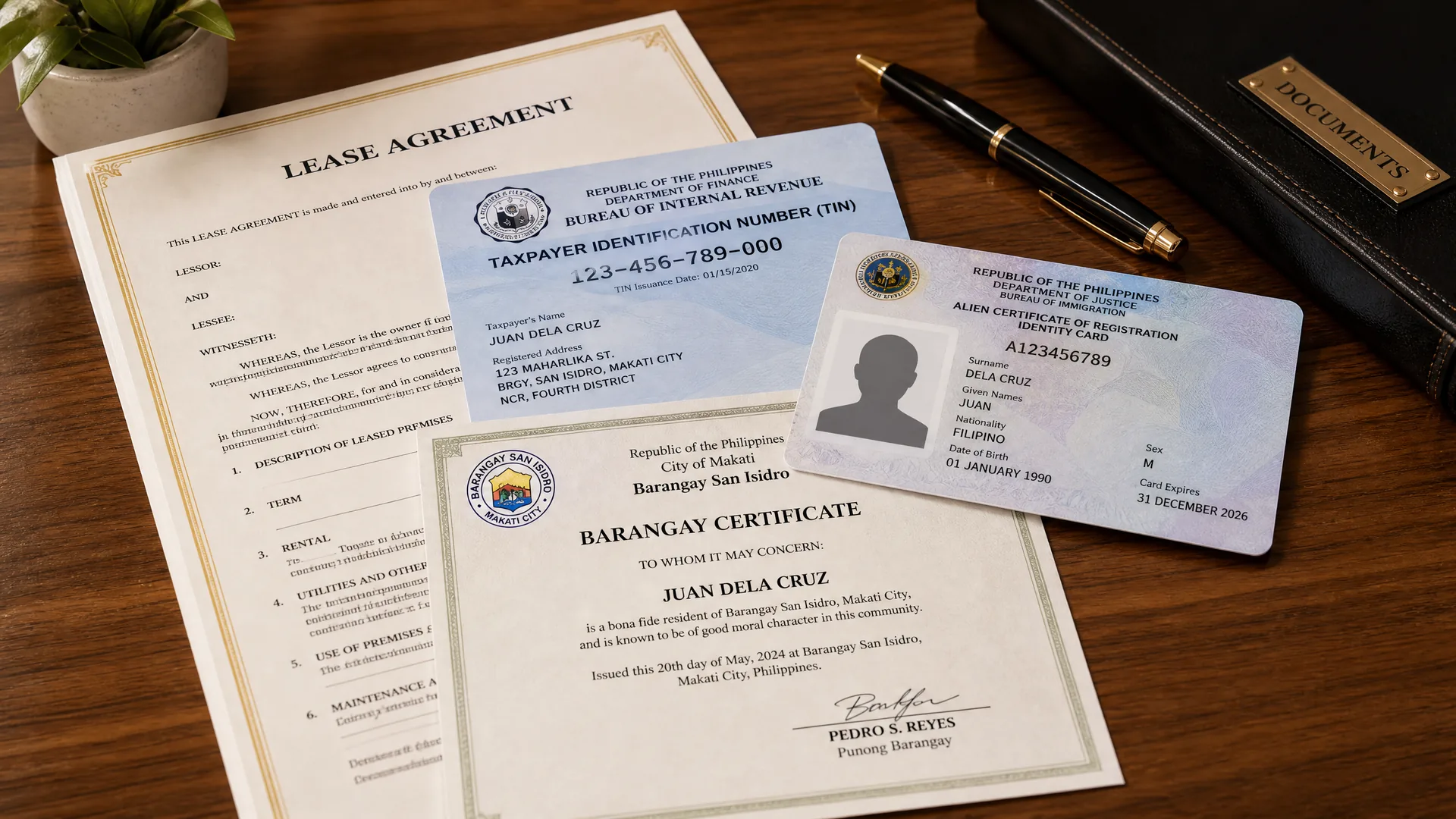
Foreign income stays outside the Philippine net for every foreigner, also when you bring it into the country, so the residence does not cost you tax on what you earn abroad. On the bank's self-certification you write the Philippines and your Philippine TIN, and the file behind it is real: the SRRV with its ID card, a lease, a Barangay certificate, your BIR registration. The Philippines does not take part in CRS, which changes nothing about the form: what you sign has to be true.
The upkeep is light. The SRRV is open from age 40, with a deposit from USD 15,000 (age 50 and over, with a pension), an annual PRA fee of USD 360 and an ID card renewed every two years. If what you mainly want is a residency with little presence, compare the routines in the easiest tax residency to maintain. If you are weighing it against the residency you already hold, read Paraguay vs Philippines for tax residency.
A new residence does not end the old one by itself
No residency removes the rules of the country you left. Many tax systems keep a former resident in their net until a clean exit, and the United States taxes its citizens wherever they live. Settle the exit first, then build the new residence.
Frequently Asked Questions
Can you be a tax resident of no country?
On paper it can happen, when no country's own test catches you. In practice banks must collect a jurisdiction of residence on the CRS self-certification, and under the OECD Commentary a "no residence" answer next to an address on file is a reason to doubt the form. The plan fails at the first account.
Can you be tax resident in two countries?
Yes, each country applies its own rules. A tax treaty then decides with a tie-breaker. Under article 4(2) of the France-Philippines treaty the order is: permanent home, centre of vital interests, habitual abode, nationality, and finally agreement between the two tax authorities.
What do I write on a bank form if I live in the Philippines?
The Philippines as your jurisdiction of residence, and the TIN the BIR gives you when you register. The SRRV, the BIR's certification of your resident alien status, your lease and your Barangay certificate back it up.
Do I have to live in the Philippines full time with an SRRV?
No. The SRRV makes you a resident alien through the visa, and your status does not hinge on how much you travel. Keep the evidence alive all the same: a lease, a Barangay certificate and your BIR registration.
Free guide
The Philippines: a flexible residence, a lighter tax bill and a better life
49 pages on visas, tax, banking, property and life in Davao City. PDF, straight to your inbox.
Our Commitment to You
The MyDavaoBase 7-Star Client Success Guarantee
Every client. Every package. No exceptions.