
Philippine Visa Options 2026
Visa Pathways
for Every Profile
Four practical routes to legal long-term residency in the Philippines. We handle the full application process from Davao City.
Tourist Visa Extension, Up to 36 Months
Citizens of most Western countries, including the United States, United Kingdom, Australia, Ireland, Canada, and EU member states, arrive in the Philippines without a visa and receive an initial 30-day admission stamp.
This can be extended continuously through the Bureau of Immigration, first by 29 days, then in periods of one, two or six months, for a total continuous stay of up to 36 months without needing a long-stay visa. Once your stay passes 59 days, the Bureau of Immigration also requires the ACR I-Card every long-stay tourist needs, filed together with the extension. After six months or more on a tourist visa, the Bureau also asks for the Emigration Clearance Certificate (ECC) you need before leaving, applied for at least 72 hours before your flight. After the 36-month maximum, a brief border exit resets the clock.
For digital workers, consultants, and investors with no need for a formal work permit, this is often the simplest starting point. No application abroad. No minimum deposit. Enter, extend, and live.
Once you actually live here, with a home, a lease and a BIR registration, you qualify as a Resident Alien for Philippine tax purposes, which is the most advantageous tax position available to foreigners. The law asks where your residence is; it sets no day count. See our Tax page for what this means in practice.
Note: Working for local Philippine employers or invoicing Philippine clients is not permitted under tourist status. If you earn income from Philippine sources, a work permit is required. Income from entirely foreign sources, no issue.
SRRV, Special Resident Retiree's Visa, Permanent Residency from Age 40
The Special Resident Retiree's Visa (SRRV), issued by the Philippine Retirement Authority (PRA), provides permanent multiple-entry residency. As of 1 September 2025, the minimum age was reduced from 50 to 40 years old, making this one of the most accessible long-term residency programmes in Asia.
Deposit requirements:
| Age | With qualifying pension (min. USD 800/month) | Without pension |
|---|---|---|
| 40-49 | USD 25,000 | USD 50,000 |
| 50+ | USD 15,000 | USD 30,000 |
The deposit is not lost money. It can be used to pay rent or to purchase a Philippine condominium unit.
Key benefits of the SRRV:
- ✓Permanent multiple-entry residency, no annual renewal
- ✓Exemption from Bureau of Immigration annual reporting
- ✓Exemption from exit and re-entry permits
- ✓Exemption from travel tax on departure
- ✓Exemption from tax on pension and annuity income
- ✓Strong basis for Resident Alien tax status regardless of days spent in-country, critical for people who travel frequently but want a fixed tax base
We manage the entire SRRV application process. Most steps can be handled remotely before you arrive.
The SRRV in detail: deposit tiers, full costs, process and common mistakes →
SIRV, Special Investor's Resident Visa, Permanent Residency from USD 75,000
The Special Investor's Resident Visa (SIRV), administered by the Board of Investments (BOI), grants permanent residency to foreign nationals aged 21 or over who invest a minimum of USD 75,000 in shares of Philippine companies, the form of investment the BOI accepts.
For Philippine tax purposes the SIRV is strong evidence of residence. The investment must be maintained for the visa to remain valid.
We support SIRV applications based on listed Philippine shares only. We do not process SIRV applications based on property acquisition, as this route is subject to legal restrictions for foreign nationals.
9G Work Visa, Via Employer of Record
The 9G Pre-Arranged Employment Visa is the standard Philippine work visa for foreign nationals employed by a Philippine entity.
For internationally mobile workers without a local employer, the 9G can be obtained via an Employer of Record (EOR) arrangement. We act as your formal employer on paper, handling the local employment contract and all associated compliance. You continue your actual work for international clients or your own business as normal.
What this gives you:
- ✓Full legal work authorisation in the Philippines
- ✓No need to incorporate your own Philippine company
- ✓Strong evidence of residence for Philippine tax purposes
- ✓A clean, compliant employment structure for banking and official purposes
We manage all documentation and the Bureau of Immigration process end to end.
13A Marriage Visa, Permanent Residency Through Marriage
If you're married to a Philippine citizen, the 13A is a non-quota immigrant visa: permanent residency by right of marriage, with government fees that are a rounding error compared to every deposit-based alternative, and the right to work built in.
The 13A in detail: requirements, the probationary year, costs, and how it compares to the SRRV →
Quota Visa, Permanent Residency Without Marriage
Not married to a Filipino, under 40, and unwilling to lock capital in a deposit? The Quota Visa is the fourth door: full Section 13 permanent residency on your own merits, capped at 50 applicants per nationality each year and rebuilt around a USD 100,000 capacity test after the 2025 reform.
The Quota Visa in detail: the USD 100,000 rule, the 50-slot race, requirements and process →
Philippine Citizenship: The Long Game
There is no citizenship-by-investment programme in the Philippines. No fast track. No donation route. Naturalisation is governed by Commonwealth Act No. 473 and is a judicial process, individual, scrutinised, and not guaranteed.
The standard requirement is ten years of continuous legal residence. This can be reduced to five years, for example if married to a Philippine citizen or born in the Philippines.
For those willing to commit the time, the Philippine passport offers: visa-free travel across Southeast Asia, Hong Kong, Singapore, Brazil, Israel, and Colombia; no conscription; a territorial-only tax system; and a politically neutral, low-profile document.
A viable long-term strategy, but not a shortcut.
Important: Visa rules change. Always verify current requirements with the relevant Philippine authority or a qualified immigration adviser before applying. This information is general guidance only.
Related reading
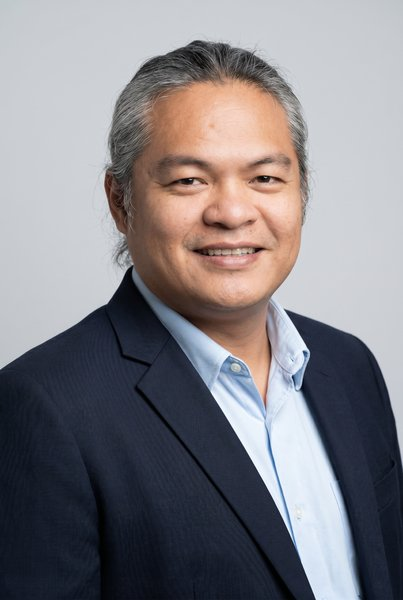
We Handle the Process. You Handle the Move.
Tim and our Davao team manage visa applications day in and day out. We know the current requirements, the current processing times, and the people involved. That is what you are paying for, not a PDF guide you could download yourself.