Retiring to the Philippines: how it really works
Start with the numbers. In the UK, the US, Canada or Australia an average pension often leaves surprisingly little once rent, bills, health cover and a long winter are paid for. In Davao City a good furnished apartment with a pool and security costs USD 315 to 550 a month, dinner for two at a good restaurant costs a fraction of what you are used to, and help in the house is normal rather than a luxury.
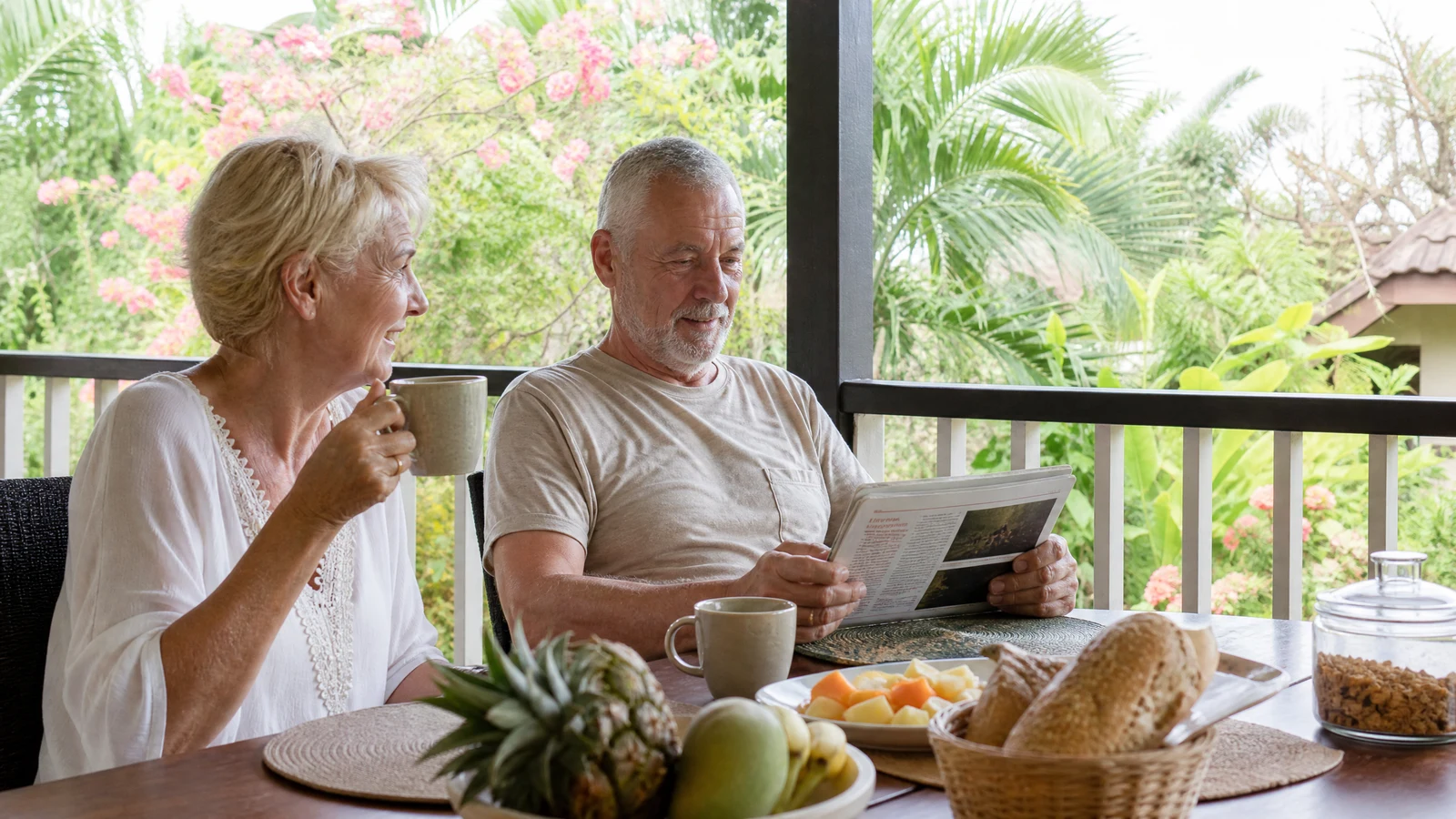
The same pension. A different life.
The Philippines is one of the few countries that backs this up with a permanent residence visa designed for it, English as an official language and a tax system that leaves your foreign pension alone. Here is the whole picture: visa, pension, tax, health, costs and a realistic plan.
The visa: the SRRV, made for your situation
The Special Resident Retiree's Visa is the Philippines' retirement visa: permanent residence, unlimited entries and exits, no annual report to the Bureau of Immigration, your spouse included. It is run by its own authority, the Philippine Retirement Authority (PRA), which means shorter channels and predictable procedures.
The essentials since the 2025 reform: a minimum age of 40 and, if you can show a lifetime pension (state or private), a bank deposit of USD 15,000 from age 50, or USD 25,000 between 40 and 49. It is a time deposit in your name: it stays your money and comes back to you if you give up the visa. Not a lost "purchase price" as in some golden visa programmes.
Every detail (tiers, documents, procedure, common mistakes) is on the SRRV page. What matters for retirees fits in one sentence: your pension statement, showing the monthly amount, apostilled or legalised, is your ticket to the lowest deposit tier. The PRA asks for a lifetime pension of at least USD 800 a month for a single applicant, or USD 1,000 with dependents.
No pension? The proof does not have to be a state pension. Your own US company can grant you a lifetime company pension, drafted by attorneys and apostilled, which the PRA accepts as proof. Your deposit is then halved: USD 50,000 becomes 25,000, USD 30,000 becomes 15,000. Allow three to six months of preparation before the SRRV application. → The Pension Plan LLC
Not retired yet but planning ahead from 40? The SRRV does not require you to have stopped working, only the age and the deposit. Many people set up their base years before their last working day.
Your pension: what actually happens
The Philippine side is quick: the Philippines does not tax your foreign pension. As a resident alien you are taxed there only on Philippine-source income, and a pension paid from the UK, the US, Canada, Australia or Ireland is not part of it, whether it lands in a Philippine account or stays in your account at home.
What decides your net pension happens at home: the tax treaty with the Philippines, where there is one, and the type of pension. The main points:
- •United States: US citizens remain taxable in the US on their worldwide income wherever they live, Social Security included; the Philippines adds no second layer. How the treaty treats pensions and Social Security: the US-Philippines tax treaty.
- •United Kingdom: your State Pension keeps its yearly increase, because the Philippines is on the UK government's list of countries where the State Pension is uprated every year. Whether a UK pension is still taxed in the UK depends on the type of pension and the UK-Philippines tax treaty: check it before you move.
- •Canada, Australia, Ireland and elsewhere: the same two questions decide it, the treaty and the type of pension.
Two kinds of pension can differ by thousands a year in net terms. Hence the rule: do the maths first, then pack.
One point for your paperwork: the BIR, the Philippine tax authority, no longer issues tax residence certificates (TRC) to foreigners. With the SRRV you get instead, every year, a BIR certification of your status as a resident alien, issued by the Revenue District Office in Davao: an official document for your pension provider, your bank or your tax office. Do not count on a tax refund that requires a TRC. What that certification is worth
Health care: the straight answer
For retirees this is the most important question, so here it is without gloss:
Health care in Davao is good, and better than its reputation. Private hospitals of international standard, English-speaking doctors (many trained in the US), modern diagnostics, short waits. Treatment costs far less than private care in Europe or North America. For the most complex cases, Singapore, one of the best health systems in the world, is under four hours away on a direct flight.
Sort out insurance before you leave. In most cases your home country's public cover does not follow you abroad, so check what your own system says about living overseas before you give up your home address.
The realistic options: private international health insurance (an expat policy; at retirement age it is the biggest item in the budget, and acceptance does not get easier with age, so get quotes before you go), topped up locally with PhilHealth and local policies for everyday care. Find out before you leave whether and how you could rejoin your home system if you come back.
Help and care at home are the country's quiet strength: housekeepers, carers and companions are available and affordable. Many couples have help here that they could never pay for at home.
What retirement really costs
A comfortable, realistic budget for a couple in Davao: a good furnished apartment (USD 315 to 550), utilities and internet (around USD 80 to 100), food including regular meals out (USD 400 to 600), international health insurance (very dependent on age: this is the line that sets your budget), help at home (from around USD 150 to 200), transport, leisure and a reserve. Many couples live comfortably on USD 1,500 to 2,500 a month, plus health insurance, and the standard of living scales up or down from there. Why Davao, in detail · Renting in Davao
Would you rather buy? Condominium units are open to foreigners in their own name, as long as foreign ownership in the building stays within 40%, with good units in Davao from around USD 80,000. → Buying property as a foreigner
Everyday life: what retirees actually do here
The question behind the question is rarely the visa. It is: what does a Tuesday look like? The honest answer from Davao: surprisingly normal, just lighter. The market with its mangoes and fresh fish, golf and the pool in January, an international expat community that meets regularly, and Filipinos whose warmth towards older people is not a cliché but a culture: respect for age is part of everyday life. English opens every door, from the doctor to the neighbour. And if you want to get involved, parishes, charities and clubs welcome new people quickly.
Family is closer than the map suggests. Davao has a direct flight of under four hours to Singapore, and Singapore connects to the major cities of Europe, North America and Australia: count on one long travel day door to door. Davao is 8 hours ahead of London in winter and 7 in summer, so your late afternoon is their morning; with the US East Coast the gap is 12 to 13 hours, which puts calls early in the morning or in the evening. And for visits: a guest room here costs less for a month than a hotel weekend at home.
What has to be said honestly: a rainy season with heavy tropical downpours, a different pace for anything administrative, and homesickness is real. The people who stay are usually the ones who lived here on a trial basis first. That is why it is the first step of the plan.
Mindanao and safety: the honest answer
Look into Davao and sooner or later you will come across your government's travel advice for parts of Mindanao. It deserves a real answer rather than a sales line. The UK government advises against all travel to western and central Mindanao and the Sulu archipelago, and against all but essential travel to the rest of Mindanao apart from Camiguin, Dinagat and Siargao; Davao City is not among those exceptions. Our team lives and works in Davao City: in the city we see the risks of any large Philippine city, while the serious danger lies in the west and south-west of the island. Before you book the flight or sign the lease, check what your insurance covers in these areas. Our advice: read your government's advice, then come and live here for a few weeks on a trial basis. Nothing settles the question like two weeks of everyday life. More on safety and daily life: why Davao.
Banking and money day to day
The practical side of your pension: a local account (BDO, BPI, Metrobank or UnionBank) is the base for rent, everyday spending and cash withdrawals. Opening one is straightforward with a lease, a passport and a TIN, and our team goes with you to the appointment. Opening a bank account in the Philippines
Many retirees run two accounts: the pension keeps arriving in an account at home, and a monthly transfer (bank transfer or money transfer service) tops up the Philippine account. That way you keep control of the exchange rate and the timing. Cards work everywhere in a city like Davao; cash is still useful for markets and small shops.
Two things to know, plainly. Philippine deposit insurance (PDIC) covers one million pesos per depositor and bank, about USD 16,000, and not a peso more: a large reserve does not belong in a local current account. Our model: Davao for living, Singapore for wealth. Banking, in detail And banks at home sometimes close the accounts of customers who move abroad: set up the new account structure before you leave, not after.
The retiree roadmap
- 1
Live here on a trial basis
One to three months, no visa needed: try Davao as everyday life, rainy season included, not just as a holiday.
- 2
Do the maths
Type of pension, tax treaty, health insurance quotes, budget: before any official move. Start with our tax section.
- 3
Prepare the SRRV
Have your pension statement and police clearance apostilled or legalised, and plan the deposit.
- 4
Build the base
Housing, TIN, bank account: our base package, mostly remote, two steps on site with our team beside you.
- 5
Complete the SRRV, then leave home properly
Only when the new base is in place and the tax question is settled do you close the door behind you. A dog or cat moving with you needs a rabies antibody titre test before its import clearance from 1 January 2027, so the new pet import rules for the Philippines put the animal's paperwork months ahead of the flight.
Frequently asked questions
What if one of us needs care?
Care at home is available and affordable in the Philippines: trained carers, around the clock if needed, at a cost that would be unthinkable in Europe or North America. For serious medical cases there are the private hospitals in Davao, and Singapore as a last resort. Protecting your spouse (accounts, powers of attorney, dependent status on the visa) is part of the preparation from the start.
Is my pension enough to live in the Philippines?
For a comfortable lifestyle in Davao a couple needs roughly USD 1,500 to 2,500 a month, plus health insurance. Work with the net amount: depending on your country and the type of pension, part of it may still be taxed at home.
Is my pension taxed in the Philippines?
No: foreign pensions are not taxed in the Philippines for a resident alien. At home it depends on the tax treaty and the type of pension: see our tax section.
Can my spouse be included in the visa?
Yes, the SRRV includes your spouse as a dependent (USD 300 application fee).
What health insurance can I get at an older age?
International expat policies are the usual answer; the premium depends on age and is the biggest item in the budget. Get quotes before you leave, and find out whether you could rejoin your home system later.
Do I have to be retired for the SRRV?
No. Despite its name, the visa only requires the minimum age (40) and the deposit. With proof of pension, though, your deposit drops to USD 15,000 from age 50.
What happens if I want to go back?
You give up the SRRV, your deposit is returned and you go home. That is why rejoining your home health system is part of the preparation.
Which language are the procedures in?
Philippine documents are issued in English, so most English-speaking retirees need no translations at all. Documents in other languages need a certified translation into English.
Our Commitment to You
The MyDavaoBase 7-Star Client Success Guarantee
Every client. Every package. No exceptions.