The short answer
- •Tax residence is a question of fact. Tax offices look at where you keep your home and spend your time, not at which certificate you hold.
- •A TRC is almost never a strict requirement for treaty benefits.
- •The SRRV makes you a resident alien and shows that you live here. Status and fact, from one document.
- •The BIR confirms that status in writing, renewed every year.
What happened in the Philippines
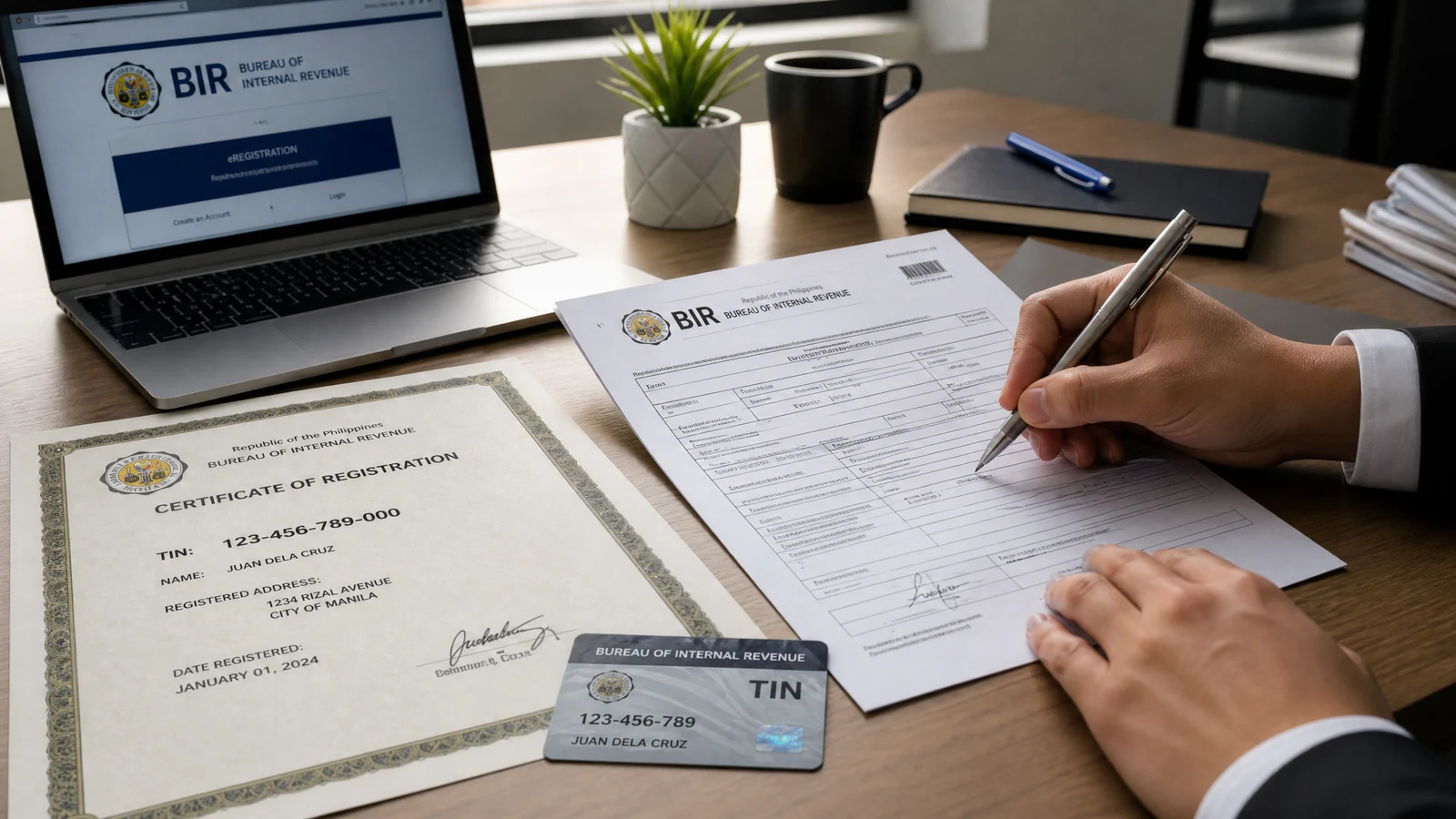
For a time the BIR issued TRCs to our SRRV clients in practice. Today it applies its published rules strictly: under RMO 51-2019, kept by RMO 43-2020, TRCs are reserved for Philippine citizens and Philippine companies. The reason is formal. The BIR issues TRCs only to people taxed on their worldwide income in the Philippines, and foreigners are taxed there on Philippine-source income only.
Your status is unchanged. The BIR now confirms it in writing instead: the certification from your Revenue District Office in Davao states that, as an SRRV holder, you are a resident alien taxed in the Philippines on Philippine-source income only. Anyone you show it to can verify it by email with the issuing office. Concierge clients with an SRRV receive it every year: MDB Concierge.
The SRRV is the real reason
Anyone concluding they can skip the SRRV because the TRC is gone has it backwards. The SRRV was always the foundation; the certificate was only the confirmation on top. The SRRV makes you a resident alien under Philippine law. It is a permanent residence right with registration at the Philippine Retirement Authority, your own ID card and your address in Davao: official evidence that you live here. Those two things are what every tax office weighs: your status and the fact of your residence.
The CRS self-certification your bank asks for
Open an account almost anywhere and the bank hands you a form: the CRS self-certification. Under the OECD's Common Reporting Standard, the bank must obtain it when you open the account and confirm that it is reasonable, using what it learned about you at opening. The Commentary to the Standard lists what makes it valid: your name, your residence address, your jurisdiction or jurisdictions of residence for tax purposes, a TIN for each, and your date of birth, signed and dated.
Leaving out your jurisdiction of residence is not a small slip. The Commentary says so in as many words: a failure to provide one "is not an inconsequential error".
Filling it in as a Philippine resident
If you live in Davao, you enter the Philippines as your jurisdiction of residence and, as your TIN, the number the BIR gives you when you register. Do not leave the field empty or write "none". Under the current Commentary, a self-certification that shows no residence for tax purposes while the file holds an address "constitutes a reason to doubt" its validity, and without a reasonable explanation the bank must obtain a new one (OECD, amended Commentary of 2023).
The Philippines does not take part in CRS. That changes nothing about the form: what you sign has to be true, and the bank tests it against what it holds. The documents below are what make "Philippines" the plausible answer.
The documents that do the work
- •Your SRRV, with your ID and PRA registration
- •The BIR's certification of your resident alien status
- •A lease in your name and a recent residence certificate from your Barangay
- •Your BIR registration and, if you choose, a filed tax return
- •Your entry and exit stamps
Questions
Do I need a TRC to claim treaty benefits?
Almost never. Tax residence is a question of fact, and tax offices weigh the evidence you bring.
Can I get a TRC?
For a time the BIR issued TRCs to our SRRV clients in practice. Under its published rules they are now reserved for Philippine citizens and companies. With an SRRV you receive the BIR's yearly certification of your resident alien status instead.
Can I skip the SRRV now?
The opposite. The SRRV establishes your resident alien status and shows that you live here. Without it you lack both, and the BIR's certification on this basis comes with the SRRV.
Why does my bank ask for a tax self-certification?
Under the OECD Common Reporting Standard, a bank must obtain one when you open an account and confirm that it is reasonable. A self-certification that names no jurisdiction of residence while the file holds an address gives the bank reason to doubt it and to ask for a new one. More on why "no residence" does not work: tax resident of nowhere.
What do I write on the self-certification if I live in the Philippines?
The Philippines as your jurisdiction of residence, and your Philippine TIN from your BIR registration. Your SRRV, the BIR's certification of your resident alien status, your lease and your Barangay certificate back it up if the bank asks.
I'm on a tourist visa. What evidence do I have?
Your BIR registration, your lease, your residence certificate from the Barangay and, if you choose, a filed Philippine tax return. The BIR's certification of resident alien status comes with the SRRV.
Free guide
The Philippines: a flexible residence, a lighter tax bill and a better life
49 pages on visas, tax, banking, property and life in Davao City. PDF, straight to your inbox.
Our Commitment to You
The MyDavaoBase 7-Star Client Success Guarantee
Every client. Every package. No exceptions.