16 July 2026
The Connection Is Better Than You Expect. The Timezone Is the Real Decision.
Fibre in Davao is fast, cheap and mostly reliable. What actually determines whether remote work here is sustainable is which continent your clients live on.
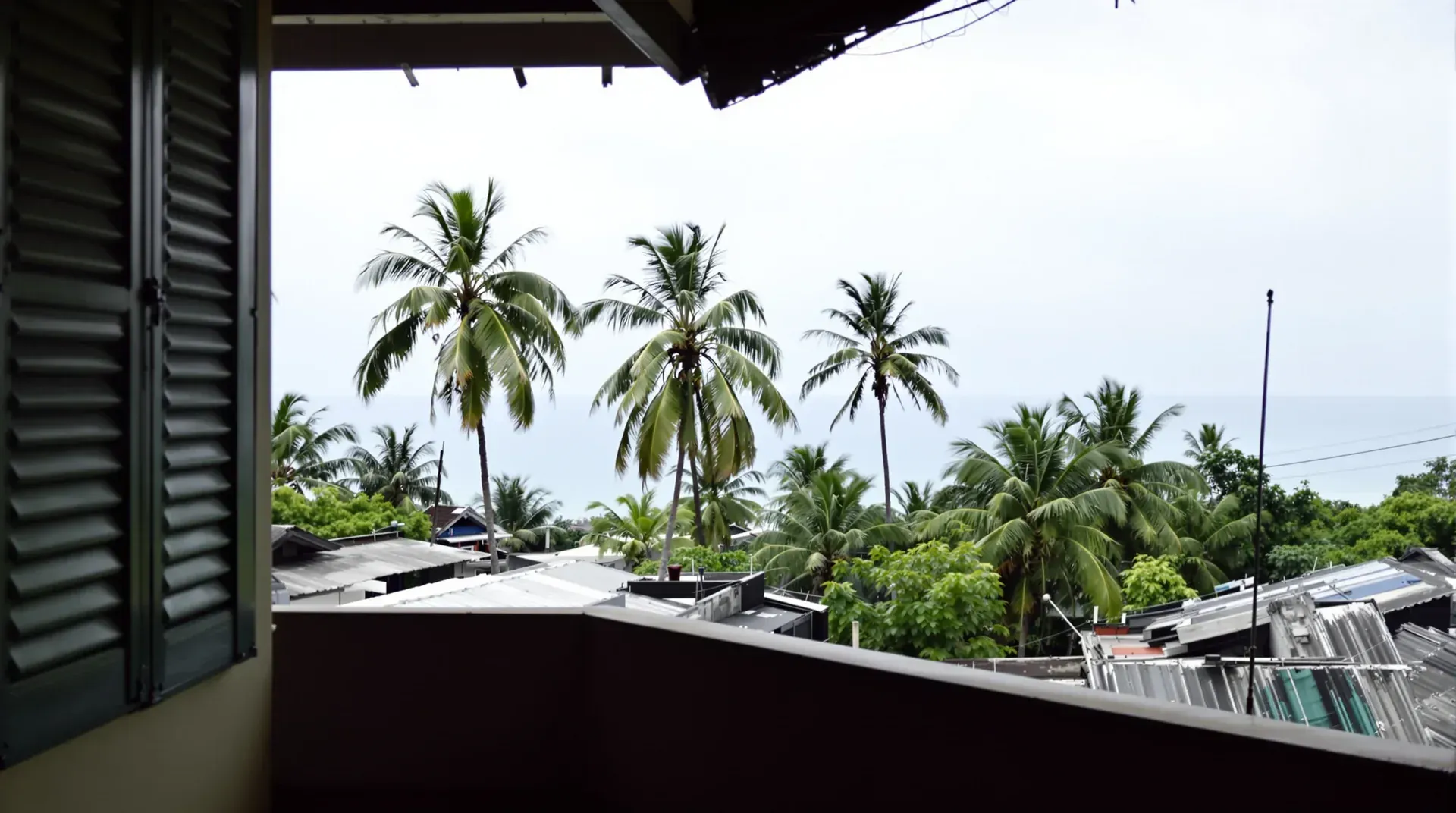
Every conversation about remote work in the Philippines starts in the wrong place.
It starts with the internet, because that is the thing people can imagine going wrong. And the internet is, honestly, fine. Better than fine in Davao. The thing that actually decides whether this works is far less dramatic and much harder to change: what time it is where your money comes from.
We will get to that. First, the infrastructure, because you should know what you are buying.
The connection
Fibre to the home is widely available across the built-up parts of Davao City. The three names you will hear are PLDT, Globe and Converge, and the residential plans they sell run from around PHP 1,500 to PHP 3,000 a month, which is roughly USD 27 to 55, for speeds that comfortably carry video calls, large uploads and a household streaming at the same time.
That is genuinely competitive with European pricing and considerably cheaper than Australian.
Three practical notes:
Coverage is by street, not by city. One building has fibre from all three providers, the building behind it has one, and a house four hundred metres away has none. Confirm the actual providers at the actual address before you sign a lease. Not the area. The address. Ask the building administrator which lines are already in the risers.
Installation takes longer than the sales call suggests. Plan for weeks rather than days, and have a mobile data plan as a bridge. Philippine mobile data is cheap and the coverage in the city is good.
Redundancy is the whole game. A serious remote worker here runs fibre plus a mobile hotspot on a different network, and treats that as a normal cost of doing business rather than a contingency. Two independent paths mean an outage is an inconvenience. One path means an outage is an apology to a client.
Starlink is available in the Philippines and is a real option, particularly for anyone living outside the fibre footprint or wanting a genuinely independent second path. It costs meaningfully more than fibre and it solves a problem fibre cannot.
The power question
Covered at length in the electricity piece, but the working-from-home version is short.
Long rotating brownouts of the kind Mindanao suffered fifteen years ago are not a normal feature of life in Davao today. What remains is ordinary distribution work: scheduled maintenance, and unscheduled outages when weather takes a line out.
The fix costs very little. A small uninterruptible power supply for the router and the modem, plus a laptop with a decent battery and a charged power bank, converts a three-hour outage from a lost afternoon into a slightly warm one. Buy it in week one, not after the first time.
If you live in a tower, ask what the generator actually covers. In many buildings it runs the lifts, corridors, pumps and security desk, and nothing inside your unit.
Where people actually work
Home, mostly. A one or two-bedroom condominium at Davao rental levels gives you space for a proper desk in a way the same budget in Lisbon or Berlin does not, and the buildings come with pools and gyms attached.
Beyond that, Davao has a working coworking scene, concentrated around the business districts and the larger malls, and the standard is decent. It is not Chiang Mai and it is not Canggu, and for some people that is the point: this is a city where foreigners work rather than a scene where foreigners perform working.
Cafés are plentiful, air-conditioned and cheap, and most have reliable wifi. The one thing to check is noise, because Filipino public space is cheerfully loud and a call from a mall café is a gamble.
Now the part that actually decides it: the clock
Philippine time is UTC plus eight, all year, with no daylight saving.
- •Against continental Europe that is a seven-hour gap in European winter and six in summer. Your 4 p.m. is their 9 a.m. This works. A European morning is your late afternoon and evening, which means you get the whole Davao morning to yourself and take calls from mid-afternoon. Many people find this the most productive arrangement they have ever had.
- •Against the UK and Ireland, an hour more again, and the same conclusion.
- •Against the US east coast, twelve or thirteen hours. This is hard. Their 9 a.m. is your 9 or 10 p.m. Doable if your work is asynchronous. Corrosive if it is not, and the people who fail at this fail slowly, over about eight months, as their sleep pattern quietly detaches from the city they moved to.
- •Against Australia and New Zealand, two to four hours. Trivially easy, and the reason a great many Australians end up here rather than in Europe.
- •Against Singapore, Hong Kong, Japan and the Gulf, easy to manageable, and this is where Davao's regional position genuinely pays off.
Be honest about this before you move, not after. It is the single most reliable predictor of whether a remote life here lasts, and it is not fixable by discipline.
The legal line, which is simpler than the forums suggest
The rule is clean.
Working for foreign employers and foreign clients, paid from abroad, is the standard and accepted use of the tourist route. That foreign-source income sits outside the Philippine tax net, and it is precisely what the 36-month extension ladder is used for by a large population of people.
What is off-limits is working for the Philippine economy without a permit: a Philippine employer, or Philippine clients invoiced locally. One local invoice converts you from a foreign-source position into a work-permit question with a tax dimension attached. If your business genuinely needs Philippine customers, that is a structuring conversation, and it starts at company structures or the 9G work visa.
One more thing that catches people. Spend more than 183 days here in a calendar year and you become a resident alien for Philippine tax purposes by day count, which is the favourable classification: taxed on Philippine-source income only. On this route your evidence is your BIR registration, your lease, your residence certificate from the Barangay and, if you choose, a filed Philippine tax return. With an SRRV you also receive the BIR's certification of your resident alien status. The full logic is on the tax residency page. More on the residency certificate.
Why remote workers end up staying
The arithmetic is not subtle. A comfortable international standard of living in Davao runs at a fraction of the equivalent in Western Europe or Australia, with the numbers set out in the cost-of-living breakdown. If your income is in euros, dollars or pounds and your costs are in pesos, the gap is the whole story.
But the people who stay do not stay for the arithmetic. They stay because the day is good: a swim before work, a city that is warm and calm and does not require armour, hospitals that work, and a flight to Singapore in four hours when they want to be somewhere else.
If that sounds like a plan rather than a fantasy, the practical starting point is how this works, and the honest comparison against the alternatives is three routes, one of them yours.
Ready to build your Davao base?
Order services directly, or book a call with Tim to discuss your situation first.