21 May 2026
The Hardest Part of Your Move Might Weigh Twelve Kilos
An import clearance you must have before you fly, a health certificate with a thirty-day clock, and an airline decision that has to be made before anything else.
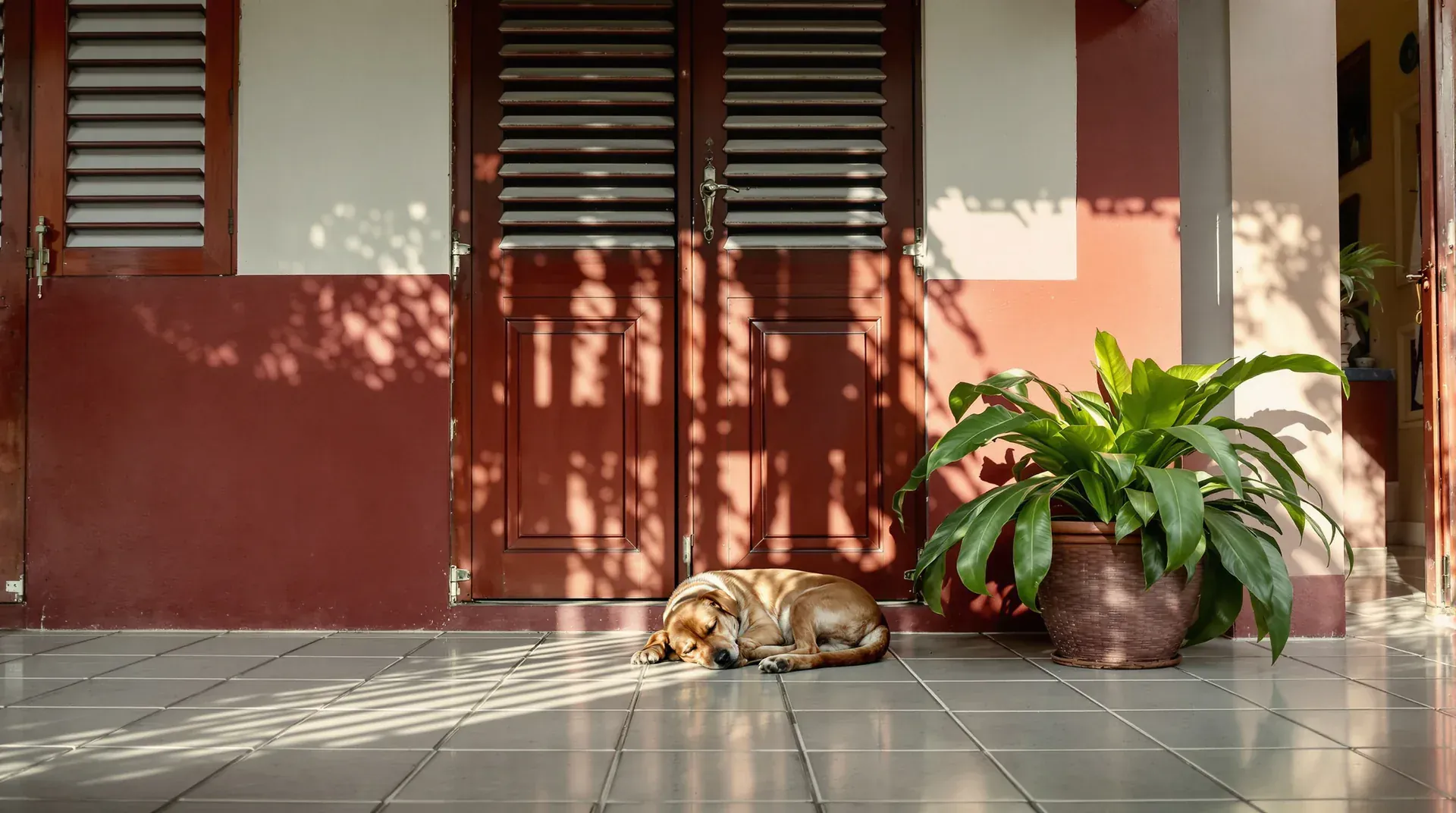
People will spend nine months planning the tax position of a move and three days planning the dog.
Then, roughly four weeks before departure, somebody discovers that the airline needs a booking for the animal that was made two months ago, that the import clearance has to exist before the flight rather than on arrival, and that the health certificate has a clock on it that has not started yet.
We have watched that discovery happen. It is the only part of a relocation that reliably reduces adults to tears, because everything else is money and this is not.
So here is the sequence, properly, in the order it has to happen.
Step one, and it is not a document: decide how the animal flies
Before permits, before vets, before anything: find out whether your dog can travel at all on the routes available to you.
There are three ways an animal crosses the world. In the cabin, which generally means small and in an approved carrier, and which most carriers restrict tightly on long-haul. As checked baggage in the hold, on the same flight as you, which is the common route for medium and large dogs. As manifest cargo, which is a separate booking, often through an agent, and which is how most large animals actually arrive.
Two things constrain this brutally.
Snub-nosed breeds. This is worth settling before you settle anything else, including which residency route you are taking. Bulldogs, pugs, French bulldogs, Boston terriers, Persian cats and their relatives are refused by many airlines in the hold, permanently, because of the mortality record. If you own one of these, resolve this question first. It may decide your route, your airline and your travel dates, and in some cases it decides whether the animal comes at all.
Heat embargoes. Airlines refuse hold transport when ground temperatures at any point in the journey exceed a threshold. Manila and Davao are warm all year. This is a real planning constraint on arrival timing.
Book the animal's space at the same time you book yourself, not afterwards. Capacity per flight is small and it goes.
Step two: the import clearance from the Bureau of Animal Industry
This is the document people miss, and missing it is not survivable at the airport.
The Philippine Department of Agriculture, through the Bureau of Animal Industry, issues an import clearance for live animals, applied for online, in advance, before travel. It is not something you obtain on arrival and it is not something a vet at home can issue.
To get it you will generally need to show:
- •Proof of microchip. The chip is the identity of the animal and every other document refers back to it.
- •A complete vaccination record, including rabies and the core canine vaccinations against distemper, leptospirosis, parvovirus and adenovirus type 2. For cats, the feline equivalents.
- •Antiparasitic treatment records, internal and external.
- •The animal's age. There is a minimum age at the point of application, so a very young puppy cannot simply travel with you.
Rabies vaccination has its own timing rules. The animal must be at least twelve weeks old at vaccination, and the vaccination must be given a minimum period before travel. Do not leave this to the final fortnight.
Step three: the veterinary health certificate, and the clock
Close to departure, an official veterinary health certificate is issued in your home country, and in most cases it must be endorsed by the government veterinary authority there, not merely signed by your local practice. In the United States that means USDA endorsement. In European countries it is the equivalent official veterinary service.
The certificate must be dated within a limited window before arrival in the Philippines. Too early and it is invalid on arrival. Too late and the endorsement will not come back in time.
This is the single most common point of failure, and it fails because two independent bureaucracies have to act inside a narrow window during which you are also moving house.
Step four: arrival and quarantine
On arrival the animal is inspected by quarantine officers, the documentation is checked against the clearance, and a quarantine requirement applies. Whether that is served at home under supervision or at a facility depends on your country of origin and on the completeness of your paperwork, so confirm the current position with the Bureau of Animal Industry when you apply rather than relying on a forum post from four years ago.
Budget for a customs and quarantine process on the day that takes hours rather than minutes, and do not schedule anything else.
What nobody tells you: the tropics are hard on a Northern European dog
The paperwork ends. The adjustment does not.
Heat. A dog bred for a temperate climate, particularly a thick-coated one, is genuinely uncomfortable in Davao. Walks move to early morning and after dark, and the middle of the day is simply not walking time, for you either. Air conditioning stops being a luxury and becomes the reason the animal sleeps.
Ticks and fleas, year round. There is no winter here to break the cycle. Preventive treatment is continuous, not seasonal, and tick-borne disease in dogs is common enough that any Davao vet will diagnose it without hesitation.
Heartworm. Mosquito-borne, endemic, and preventable with monthly medication that costs very little. Not preventing it is negligence.
Rabies is present in the Philippines. It is not an abstraction. It is the reason the vaccination rules are strict and it is worth knowing that stray and community dogs are part of daily life here.
Free-roaming dogs. Your leashed, socialised European dog will meet dogs who have never been on a lead. This goes better than you fear, most of the time, but it changes where and how you walk.
The compensations are real. Veterinary care in Davao is competent and startlingly affordable by Western standards, in the same way human healthcare here is. Consultations, vaccinations and routine surgery cost a fraction of what they cost in Germany or Australia. A condition that would be a financial decision at home is simply treated here.
The housing question, which you should settle before you fly
Not every condominium building in Davao accepts pets, and among those that do, many cap the size or the number. Ask before you sign anything, and ask the building administration rather than the agent, because the answers differ.
If a dog is non-negotiable, that narrows your search meaningfully and pushes you toward houses and low-rise compounds rather than towers. That is a real trade-off in a city where the towers have the pools and the security. Our neighbourhood guide is the place to start and the rental examples show what the two options actually look like.
Is it worth it?
Yes, and it is not close.
The cost of moving a medium dog internationally, done properly, runs into four figures in euros once you count the crate, the cargo booking, the veterinary work and the agent if you use one. It is one of the more expensive lines in a relocation and it buys nothing you can point at.
What it buys is the thing that makes an apartment in a strange city into a home in the second week rather than the sixth month. Every person we know who left an animal behind regretted it. Nobody who brought one did.
Start the paperwork four months out, book the flight and the animal together, and treat the health certificate window as the fixed point that everything else moves around.
And if you want the rest of the arrival sequence in order, the first thirty days covers what happens once you and the dog are both on the ground.
Ready to build your Davao base?
Order services directly, or book a call with Tim to discuss your situation first.