26 February 2026
The First Bill Is the One That Teaches You Something
Everything in the Philippines is cheaper than at home. Except electricity, which is among the most expensive in Southeast Asia, and which you are about to use around the clock.
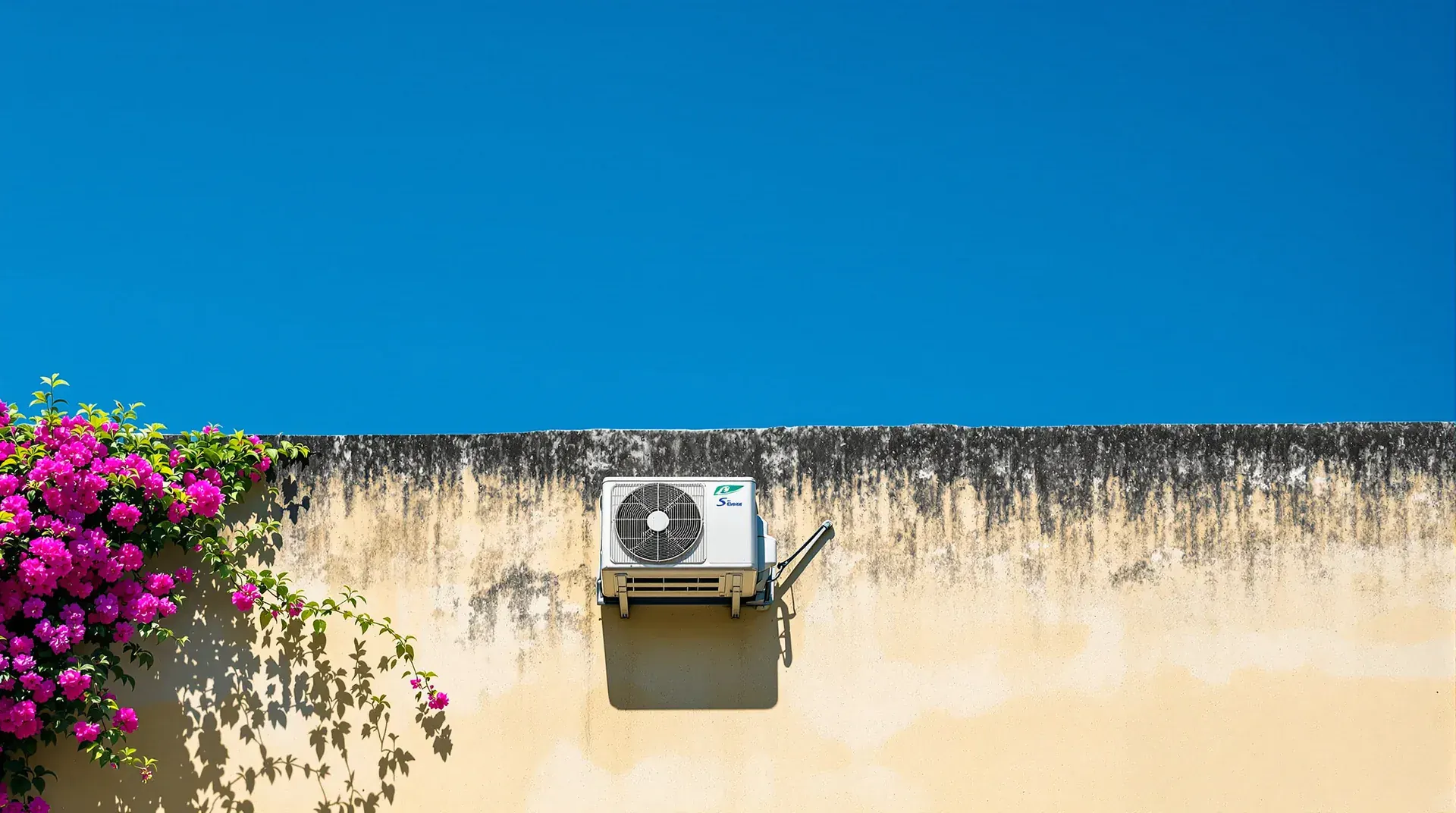
You will remember your first Davao electricity bill.
Not because it is ruinous. Because it is the one line item on your entire budget that did not obey the rule. Rent went down by two thirds. Food went down by three quarters. A specialist consultation costs what a coffee and a sandwich cost in Zurich. And then the power bill arrives and it is roughly what you paid in Europe, and for a moment you wonder whether somebody has made a mistake.
Nobody has made a mistake. Philippine electricity is among the most expensive in Southeast Asia, and understanding why is the difference between a bill you shrug at and a bill that quietly costs you a thousand euros a year for nothing.
Why it costs what it costs
The short version: the Philippines produces most of its power through privately owned generators selling into a competitive market, with no consumer subsidy. In much of the region, the state owns generation, or subsidises fuel, or both. Here, the actual cost of producing and delivering a kilowatt hour ends up on your bill, along with transmission, distribution, system loss and a set of universal charges.
The country is also an archipelago, which is a genuinely expensive way to run a grid. Mindanao, where Davao sits, was for decades dependent on the Agus and Pulangi hydro complexes, which meant that a dry year was a brownout year. That is why anybody who lived here fifteen years ago has stories.
Those days are largely over. Mindanao's supply position today is dramatically better than its reputation, and long rotating outages of the old kind are no longer a normal part of life in Davao City. What remains is the ordinary business of any distribution network: scheduled maintenance interruptions, and unscheduled ones when a typhoon takes a line down somewhere.
What a Davao bill actually looks like
Our cost-of-living breakdown puts residential electricity at PHP 2,000 to 5,000 a month, which is roughly USD 36 to 90. That range is not a hedge. It is a description of two completely different lives.
The bottom of it is a modest condominium, aircon in the bedroom at night, fans everywhere else. The top of it is a two-bedroom unit with the air conditioning running twenty-four hours in more than one room. The difference between the two ends is almost entirely one appliance.
For a house rather than a condo, particularly one with a water pump, an electric water heater and multiple split units, the top of the range is not the ceiling. We know families running comfortably past PHP 8,000 a month, and they are not doing anything unreasonable. They are simply cooling a lot of air.
The single decision that matters: inverter or not
If you take one practical thing from this piece, take this.
A conventional air conditioner works like a light switch. The compressor runs at full power until the room reaches temperature, stops, and starts again at full power when the room warms up. Every restart is a spike.
An inverter unit varies the compressor speed instead, running slowly and continuously to hold the temperature. It costs more to buy. In a climate where the machine runs eight to twenty-four hours a day, every day, forever, it pays that difference back inside a year and then keeps paying. The savings are large, in the range where you notice them on the bill rather than having to calculate them.
When you view apartments, ask what the units are. A landlord who has fitted inverters has told you something about the building. A landlord who has fitted the cheapest window units has also told you something, and you will be the one paying for it monthly.
The rest of the list, in order of how much it saves
- •Set it to 24 or 25 degrees, not 18. Every degree lower costs real money, and 18 degrees in a tropical bedroom is not comfort, it is a head cold.
- •Cool one room properly rather than three rooms badly. Nearly everyone who lives here long term ends up with a cold bedroom and a fan-cooled living room, and it is not a compromise, it is what actually feels good.
- •Clean the filters monthly. In a dusty tropical city a blocked filter makes the machine work harder for less cooling. This is the most boring advice in this article and the most frequently ignored.
- •Curtains and a closed door. Cooling a room with the balcony door open is a hobby, not a plan.
- •Electric water heaters are the hidden second offender. Many units have an instant heater in the shower. In this climate you need it far less than instinct suggests.
- •Watch the standby load. A house full of adapters, routers, a second fridge somebody left in the utility room and a dead chest freezer nobody uses will quietly add a few hundred pesos a month.
Living with an outage
When the power does go, three things determine whether it is an inconvenience or a bad day.
Does the building have a generator, and what does it actually cover? Most decent condominium developments in Davao have one. In a great many of them it powers the lifts, the corridors, the pumps and the security desk, and nothing inside your unit. Ask, specifically, at viewing. The answer varies enormously and the marketing never mentions it.
Water. In a tower, water reaches your tap because a pump put it there. No power, no pump, and depending on the building, no water within an hour or two. Keeping drinking water in the flat is not survivalism here, it is housekeeping.
Internet. Fibre to the building does not help if the box in your flat has no power. A small uninterruptible power supply for the router and a laptop costs very little and converts a four-hour outage from a lost workday into a mildly warm one. If you work from here, that is not optional, and it belongs in the same category as everything else in working remotely from Davao.
A phone power bank, charged. Because Grab, banking, messaging and your building's guard house all live in the same device.
The thing that surprises people from cold countries
Nobody heats anything here. Not the home, not the water in most cases, not ever.
Anyone arriving from Germany, Austria, Switzerland, the UK or Scandinavia is used to an energy budget dominated by winter. Gas bills, oil deliveries, a boiler that dies in January. All of that disappears, permanently, and it does not come back. There is no seasonal spike, no fuel price panic, no cold snap.
What you get instead is a flat, predictable, year-round cooling load that is entirely under your control. Which is why the honest summary of Philippine energy costs is not "expensive". It is: the unit price is high, the total is moderate, and unlike at home, the amount is almost entirely a function of your own choices.
Where it fits in the bigger picture
A power bill is a small thing to write fifteen hundred words about. It is here because it is the single most common place where a well-planned move meets an unplanned monthly cost, the sort of thing our service exists to price before you sign, and because it belongs to a family of small operational facts that decide whether a place feels comfortable or exhausting.
Which room the sun hits at two in the afternoon. Whether the building has a generator. Whether the aircon is an inverter. Whether the water pressure survives a Tuesday outage. Those are the things that turn out to matter, and they are exactly the things you cannot check from a listing photograph or a booking site, which is why we look at buildings ourselves before clients sign anything. It is the same argument as boots on the ground, applied to a compressor.
If you want the ranges by neighbourhood rather than in the abstract, the Davao neighbourhood guide is the place to start, and our rental examples show what the money actually buys.
Ready to build your Davao base?
Order services directly, or book a call with Tim to discuss your situation first.