9 April 2026
It Is the Nicest Plan in the Philippines, and the One That Ruins the Most Foreigners
You can own the building. You cannot own the ground under it. Everything that goes wrong here comes from not taking that sentence seriously enough.
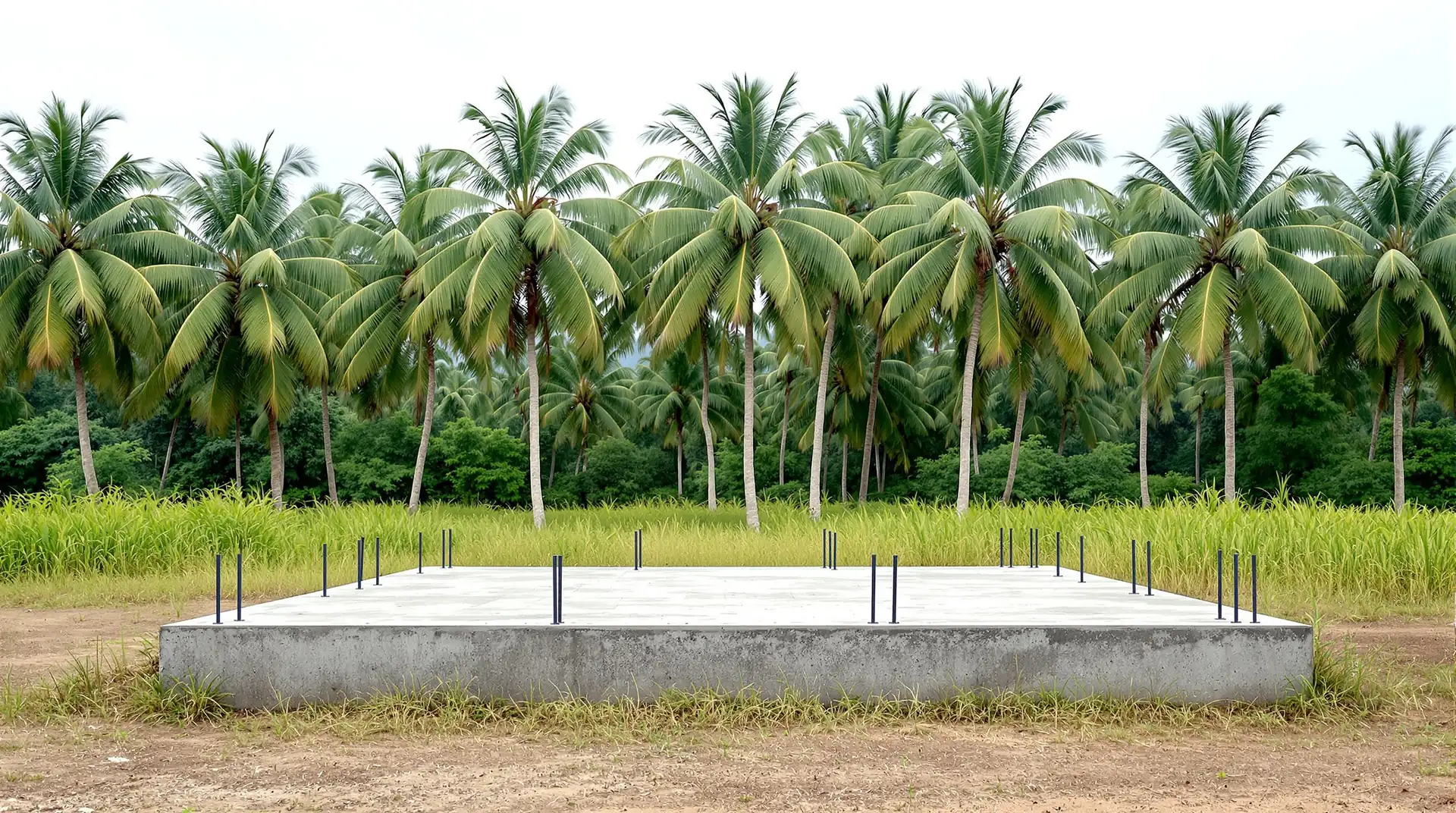
It usually starts on a Sunday afternoon.
Somebody's uncle drives you out past the last of the subdivisions, up a track, and stops at a piece of ground with a view of the hills and a mango tree in the middle of it. It belongs to the family. It has belonged to the family since before anyone in the car was born. And they would love, genuinely love, for you to build there.
You can already see the house. The wide veranda. The kitchen door that opens onto the garden. You could build the whole thing for less than the deposit on a two-bedroom flat in a mid-sized German city, and you would be surrounded by people who want you there.
This is the loveliest plan in the Philippines. It is also, done carelessly, the fastest way for a foreigner to hand over a life's savings and receive nothing legally recognisable in return.
The constitutional fact, stated plainly
Foreign nationals cannot own land in the Philippines. Not directly. Not indirectly. Not through a spouse. Not through a friend, a nominee or a company put together for the purpose.
This is not a policy that will soften with the right lawyer. It is a constitutional restriction on the ownership of land by non-Filipinos, and it has survived every wave of enthusiasm for foreign investment the country has had.
Two things follow, and both matter.
Marriage does not change it. If you are married to a Philippine citizen and land is bought during the marriage, that land belongs to her, exclusively. Not to you both. Not half. Philippine law treats it as her separate property because it constitutionally cannot be yours.
That may be a perfectly sound family decision, taken with open eyes, and thousands of couples make it happily. But it is not you owning land, and the number of separations and inheritance disputes that have turned on a foreigner believing otherwise would fill a shelf.
Nominee arrangements are illegal, not merely risky. A Filipino frontman holding title "for" you, with a side agreement in a drawer, breaches the Anti-Dummy Law. The agreement is unenforceable by design. If it goes wrong, you cannot even sue on it, because the courts will not enforce a contract whose purpose was to evade the restriction. It is the perfect crime against yourself.
Our rule for clients is short: if a structure only works while nobody looks at it, we do not build it.
What you can actually hold
The legal menu is smaller than the internet suggests and larger than the pessimists claim.
A condominium unit, in your own name, with a real title. Philippine law permits foreign ownership of condominium units outright, so long as foreign ownership in the building stays within 40 per cent. You receive a Condominium Certificate of Title: registered, transferable, inheritable, genuinely yours. Good units in Davao start around USD 80,000, and the tiers are set out on the property page with real examples our own team selected.
A townhouse, sometimes, where the development is organised under a registered condominium corporation. The legal structure decides this, not the shape of the building. Verify before you fall in love with a floor plan.
A long lease on land: 25 years, renewable once for another 25. Fifty years of documented, registered, enforceable control. This is the instrument that makes the house on the hillside possible, and it is the one almost nobody uses properly.
The building is not the land
Here is the distinction that saves people, and it is worth reading twice.
You may own a house. You may not own the land it stands on. Under Philippine law a building and the land beneath it can have different owners. So the structure that actually works is this:
- •The land is leased to you, formally, for 25 years with a renewal option for 25 more.
- •The lease is in writing, notarised, and registered against the title at the Registry of Deeds, so that it binds anybody who later acquires the land.
- •The house is built by you, documented as yours, with the building permit, the receipts, the contractor agreements and the tax declaration in your name.
Done that way, you hold a registered right that survives a change of heart, a change of ownership, and a death in the family. Done the other way, with a handshake and a Sunday afternoon, you hold a building somebody else can lawfully tell you to leave.
The conversation nobody wants to have
The difficulty is never legal. It is social.
Asking a family that has just offered you their land to sign a notarised lease feels, to a Western sensibility, like accusing them of something. It is not. But it will land that way if you introduce it badly, and how you introduce it decides whether the next twenty years are easy.
What works, in our experience:
Frame it as protection for them, not for you. A registered lease clarifies exactly which part of that hillside is committed and which is not, forever, for every sibling and cousin who has a claim on the family's property. Filipino families are large and land disputes among heirs are common. A document that says precisely what was agreed is a gift to the next generation, not a slight to this one.
Do it before the money moves. Nobody minds paperwork before construction. Everybody minds paperwork after the house is finished, because by then the question has changed from *what did we agree* to *what are you implying*.
Use a lawyer, and let the lawyer be the one who insists. This is what lawyers are for. You get to be the person who wanted to build a nice house.
Bring it up early in the relationship generally. The same principle applies here as to the marriage documents: check the legal position in month two, not month twenty.
The other question: what happens when you die
A foreigner who builds a house on leased family land and dies without planning has left his heirs a problem, and often left his partner one too.
The building is an asset. The lease is an asset. Both pass under succession rules that may or may not be what you assumed, and Philippine estate procedure is not fast. If there is a will from another country, there may be a further proceeding to have it recognised.
None of this is unsolvable, and all of it is very much cheaper to solve in advance. We wrote about it separately in what happens to your condo when you die, because it deserves its own piece and because the answers surprise people.
The honest recommendation
If you want a garden and a hillside and a dog, the 25 plus 25 lease with a properly documented building is a real answer and it works. Use it.
If what you actually want is simplicity, a title in your own name, no conversations with anybody's uncle, and the ability to sell in a week, buy a condominium. It is the cleanest ownership available to a foreigner in this country, the Davao market is genuinely good value, and it is the option most of our clients choose in the end.
And if somebody offers you a corporation with sixty per cent Filipino shareholders who happen to be his relatives, and assures you it is how everybody does it: walk away. Not because you will definitely be caught. Because you will have spent a large amount of money on a right you cannot enforce, in a country whose courts are extremely clear about this, and there is a lawful alternative sitting right next to it that does almost everything you wanted.
The land is not the dream. The life on it is. There is more than one way to get there, and only one of them holds up in a registry office.
If you want the Davao market rather than the theory, start with the rental examples or bring the plot and the family to our team here.
Ready to build your Davao base?
Order services directly, or book a call with Tim to discuss your situation first.