16 April 2026
For Four Days in Spring, the Philippines Simply Closes
Government offices shut. Flights fill up months ahead. Half of Davao goes to the beach and the other half goes to church. If you have paperwork pending, this week will find you.
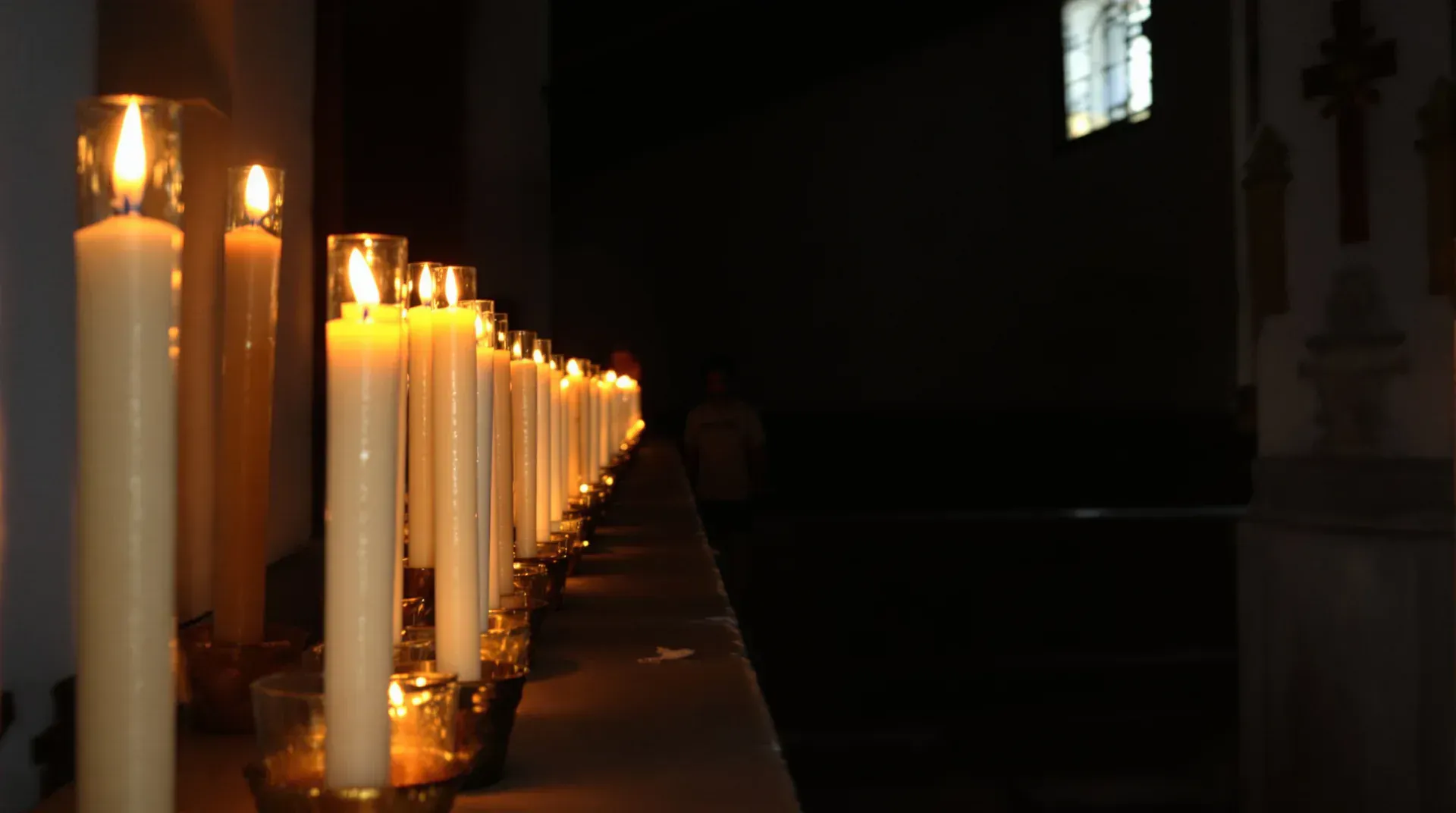
There is a particular moment, usually on the Wednesday, when a foreigner new to the Philippines walks into a government office and finds a printed sign taped to the glass.
The sign says the office will reopen on Monday.
It is Wednesday.
Holy Week, Semana Santa, is the single largest interruption in the Philippine year, larger in its practical effects than Christmas, because Christmas at least happens gradually. Holy Week arrives all at once, empties the cities, closes the institutions, and reorganises the country for four days around something that is not commerce.
If you live here, you plan around it. If you do not, it plans around you.
What actually closes, and when
The core is Thursday and Friday. Maundy Thursday and Good Friday are regular holidays across the Philippines, and Black Saturday is a special non-working day. In practice the shutdown is wider than the calendar:
- •Government offices, including the Bureau of Immigration and the Bureau of Internal Revenue, are effectively unavailable from Thursday. Many run at half strength from Wednesday because staff are travelling home to the provinces.
- •Banks close Thursday and Friday. ATMs work, but they are not restocked at the usual pace and by Friday afternoon in a beach town they are empty.
- •Malls vary. In Davao, most of the big centres close on Good Friday or open very late, and the supermarkets inside them follow. Wednesday is therefore the busiest shopping day of the entire year, and you should not be in a supermarket on Wednesday evening.
- •Alcohol is not sold in many places on Good Friday, by local rule or by simple convention.
- •Public transport thins dramatically on Friday, and Grab availability in the middle of the day becomes a genuine problem.
Everything reopens on the Monday, into an inbox that has been accumulating since Wednesday.
Why the flights are gone in January
This is the practical fact that costs foreigners real money every year.
Holy Week is when the Philippines goes home. Millions of people who work in Manila, Cebu or abroad return to their home provinces, and millions more take the only reliable long break of the working year. Domestic flights, ferries and buses sell out weeks or months in advance, and prices on what is left roughly double.
If you are planning to be anywhere other than where you live during Holy Week, book it in January. Not in March. In January. And if you were thinking of using the quiet week for a visa run, understand that everybody else had the same idea about travelling and nobody in immigration had the same idea about working.
What it is actually like in Davao
Davao does Holy Week differently from Luzon, and this surprises people who arrive with images from Pampanga in their heads.
The dramatic public penitence that international media loves, the flagellants and the re-enacted crucifixions, is a Luzon tradition, concentrated in a few specific provinces. It is not what happens in Mindanao and it is not what happens here.
What happens in Davao is quieter and, honestly, more affecting. Churches are full from Thursday evening. There are processions with carriages carrying images, moving slowly through neighbourhoods after dark, with families walking behind them and someone singing. On Good Friday the city is genuinely still, in a way you will not have experienced in a European city in your lifetime. The traffic stops. The construction stops. The karaoke stops.
And then, from Saturday, everybody goes to the water. Samal Island fills. The resorts along the coast fill. The beaches at Talicud fill. If you have never seen a Filipino family beach day, it involves a tent, a portable speaker, four generations, and enough food for a wedding.
Davao is unusually well placed for that half of the week, which is one of the smaller reasons we are here rather than in the capital: the sea is twenty minutes away by ferry, not four hours by car through traffic. It is the same argument we make at greater length in Davao City vs Manila.
The mixed city, and why nobody minds
One thing worth understanding, particularly if your only image of Holy Week is Catholic.
Davao is a genuinely mixed city. It has a large Muslim population, a long Lumad presence, and a civic culture that has made a point of accommodating all of them. The city marks the Islamic holidays as well, and the Kadayawan festival in August is explicitly built around the region's eleven tribes.
That mixture is not a footnote here. It is one of the reasons the city feels the way it feels, and it is part of what people are describing when they say Davao is easier to live in than they expected. We touched on the safety side of the same phenomenon in why Davao is safer than you think.
The practical planning list
If you take nothing else from this piece, take the calendar discipline.
Do your government business before Wednesday, or after the following Monday. This includes anything at the Bureau of Immigration, and anything on the visa ladder. If you are a registered foreign national and you left your Annual Report until the last minute, note that the deadline is 1 March and Holy Week falls later, which means your excuse has already expired.
Do not schedule a visa extension for Holy Week. Extensions run on dates, and dates do not pause because the office did. If an extension falls due in that window, deal with it the week before. This is the sort of thing that makes an otherwise clean file untidy, and untidy files are the only kind that ever cause trouble, as we argued in the piece comparing the three routes.
Draw cash on Wednesday. Enough for four days.
Fill the fridge on Tuesday. Not Wednesday.
If you employ anybody, pay them early and expect them to travel. Your helper's family is in a province, and Holy Week is when she goes there. This is not negotiable and should not be treated as though it were. The obligations that come with employing a kasambahay are set out in the househelp piece.
A note on the food, because it is genuinely strange and genuinely good
Good Friday is a fasting day, and abstinence from meat is widely observed even by people who are otherwise casual about the church. What replaces it is one of the better arguments for being here in April.
Fish, obviously, and in a coastal city that is no hardship. But also binignit, a thick coconut milk stew of sweet potato, taro, banana, jackfruit and sago that is eaten specifically during Holy Week and at almost no other time. Someone will make it. Someone will bring you a bowl of it. It is warm, sweet, faintly medicinal, and after a couple of years you will find yourself looking forward to it in a way that has nothing to do with theology.
Restaurants that stay open lean heavily seafood. Vegetarians have, for one week in the year, an unusually easy time of it.
And the thing nobody expects to enjoy
Ask a foreigner who has lived here five years what their favourite week of the year is, and a surprising number will say this one.
Not for the religion, necessarily. For the stillness. There is one afternoon, usually the Friday, when an entire noisy, crowded, relentlessly cheerful country goes quiet at the same time, and the sound of a Philippine city with nothing running in it is something you will remember.
Then on Sunday it all starts again at full volume, the malls reopen, the traffic returns, and somebody puts on a sound system at eight in the morning.
Nine months later you will be booking your flights in January like everybody else, which is roughly the point at which you have stopped being a visitor. If you want to understand what the rest of that transition looks like, the first thirty days is where it starts and why Davao is where it ends up.
Ready to build your Davao base?
Order services directly, or book a call with Tim to discuss your situation first.