19 February 2026
Someone Else Will Clean Your House, and You Will Feel Strange About It for a Month
It is normal here, it is affordable, and it is also a formal employment relationship with a written contract, social insurance and a minimum wage. Most foreigners get the first part and miss the second.
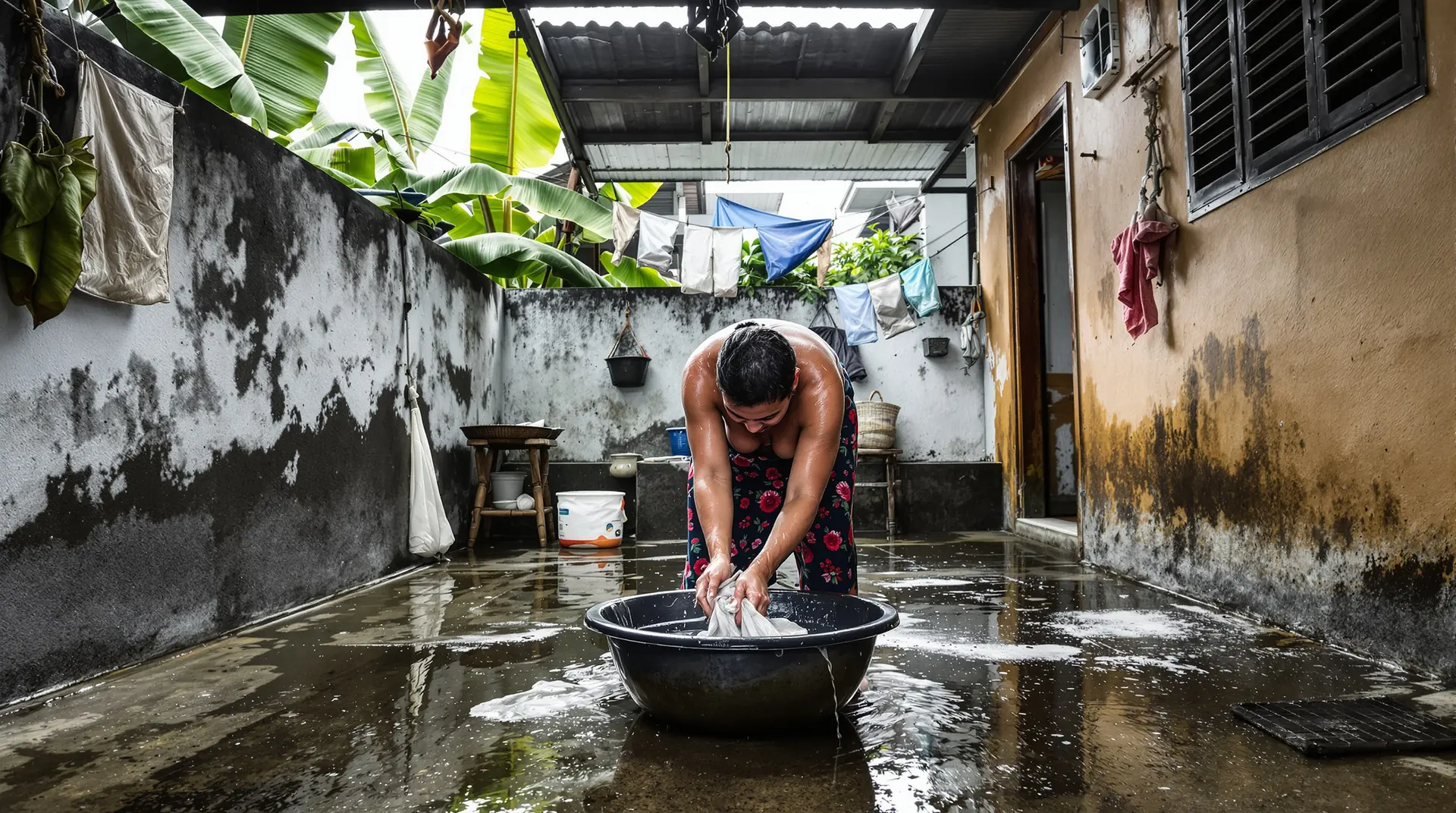
The conversation always goes the same way.
Somebody who has been in Davao two months says, slightly embarrassed, that a neighbour has suggested they get help. They say it the way you would confess to something. "I mean, I can clean my own flat." Of course you can. That was never the question.
Then, three months later, the same person is explaining to a visitor from home that Ate Nene comes four days a week, that the house has never been this clean, that they have not thought about laundry since March, and that they would sooner give up the car.
The adjustment is real and it is worth taking seriously, because it is not only about convenience. It is about becoming an employer, in a country with a specific law about exactly this, and most foreign arrivals go three years without ever reading it.
First, the cultural part, honestly
In the Philippines, domestic help is not a marker of extreme wealth. It is ordinary. Middle-class Filipino households have a kasambahay. Teachers have one. Nurses have one. The category includes general house helpers, cooks, gardeners, laundry workers and yayas, the nannies who in many families are a permanent and beloved presence for twenty years.
What trips up Northern Europeans in particular is not the cost. It is the proximity. Someone is in your house, folding your things, knowing your habits, present during your arguments. In a culture where privacy is defined more loosely than in Zurich or Hamburg, that is normal. To you, at first, it will not be.
Two pieces of advice from people who went through it:
- •Decide what you actually want before you hire. Live-in and live-out are different lives. Live-out, three or four days a week, is what most foreign residents settle on and it preserves the evenings as yours.
- •Do not confuse warmth with informality. The relationship will be warm. It should still be written down.
What it costs, and what the law actually requires
Here is where it stops being a lifestyle question.
Domestic work in the Philippines is governed by Republic Act 10361, the Domestic Workers Act, universally called the Kasambahay Law. It is not advisory. It sets a floor, and the floor includes things Western employers routinely fail to provide because nobody told them.
The regional wage boards set the minimum. In Davao City the kasambahay monthly minimum is PHP 6,000, set by the region's Wage Order No. RB XI-DW-03 for chartered cities and first-class municipalities; in the region's other municipalities it is PHP 5,000. In practice, foreign households in Davao pay meaningfully above the floor, and for a good, trusted, long-term helper working full days you should expect to be somewhere north of it. That is not charity, it is a functioning labour market: a helper with a reputation has options.
But the wage is the easy part. The law also requires:
- •A written employment contract. Not a handshake. Duties, hours, rest day, wage, accommodation arrangements if live-in.
- •At least one full rest day per week, twenty-four consecutive hours.
- •Five days of paid leave per year after one year of service.
- •A thirteenth month payment, the same annual entitlement enjoyed by employees across the Philippines.
- •Coverage under SSS, PhilHealth and Pag-IBIG once she has worked for you for one month, whatever she earns. Section 30 of the law puts the premiums on the employer, and a helper earning PHP 5,000 a month or more pays her proportionate share. At the Davao City floor of PHP 6,000, her share comes out of her wage and your employer share comes on top of it. Only below PHP 5,000 does the household pay the whole contribution, with nothing deducted from her pay.
That last obligation is the one we see missed most often, and it is the one that matters most to her. SSS is her pension. PhilHealth is her hospital bill. A helper who worked in foreign households for fifteen years with no contributions paid has nothing at the end of it, and she will be far too polite to raise the subject with you.
What this actually costs you, all in
Take a typical arrangement in Davao: a live-out helper, five days a week, cleaning, laundry, some cooking and shopping. Wage above the regional floor, plus the statutory contributions, plus the thirteenth month, plus the meals she eats in your house, plus transport if you cover it.
Even set up entirely properly, with every contribution paid, the total sits comfortably inside the range our cost-of-living breakdown allows for a generous household, and well inside what our packages assume. It is one of the very few things in life where doing it correctly costs a small fraction of what doing it correctly would cost at home, and where the difference is not extracted from the person doing the work.
Which is exactly why doing it correctly is not optional. The margin here is so wide that skimping is indefensible.
How people actually find someone
Not through an agency, mostly. Through the same network that governs everything else socially here: a recommendation. Your neighbour's helper has a sister. Your landlady knows a woman who worked for a family that has moved to Manila. The barangay knows everyone.
This is a feature, not a limitation. A helper who arrives through a network arrives with a reputation attached, and reputation is the only real security either side has. It also means the relationship starts inside a social structure, which cuts both ways: it protects her, and it means how you behave becomes known.
Ask for and check identification. Have the contract drawn properly. Register her. Then relax, because at that point the arrangement is on a footing that survives disagreement.
The part nobody warns you about
She will become part of your household in a way that a cleaner in Germany does not.
She will know when you are ill. She will have opinions about your diet. If you have children, they will love her, and she will love them, and one day you will realise your four-year-old speaks better Bisaya than you do because of the eight hours a day they spend together. If a family emergency happens on her side, and it will, you will be asked for an advance, and how you handle that moment will define the next five years of the relationship.
There is a version of this that goes wrong: the foreigner who treats the arrangement as a transaction, is scrupulously legal, pays on the day, and never learns a single thing about the person in his kitchen. That version works. It is just poorer than it needed to be.
And there is a version that goes wrong the other way: the foreigner who is so uncomfortable with the hierarchy that he refuses to give instructions, apologises constantly, and creates an employee who has no idea what is expected of her. Clarity is kinder than embarrassment.
Why this belongs on a residency site at all
Because it is one of the concrete, unglamorous ways that a life here is genuinely different from a life at home, and because the legal side of it is a real obligation that comes with running a household in the Philippines.
If you are building a base here properly, you are already in the habit of doing things on the record: a registered lease, a Barangay Certificate, a TIN, a bank account in your own name. Employing someone is the same instinct applied to a person. It belongs in the same file as everything else in a properly built base.
And it is one of the reasons the cost comparison between Davao and a Western city is not really a comparison at all. It is not that things are cheaper. It is that a category of life that is closed to ordinary people in Europe is open to ordinary people here, which is a different claim entirely, and the one we make on the Davao page.
Ready to build your Davao base?
Order services directly, or book a call with Tim to discuss your situation first.