12 March 2026
Davao Drives Slower Than Any City in the Philippines, on Purpose
Thirty kilometres an hour downtown, a liquor ban after one in the morning, and an LTO card that turns out to be one of the most useful documents a foreign resident can hold.
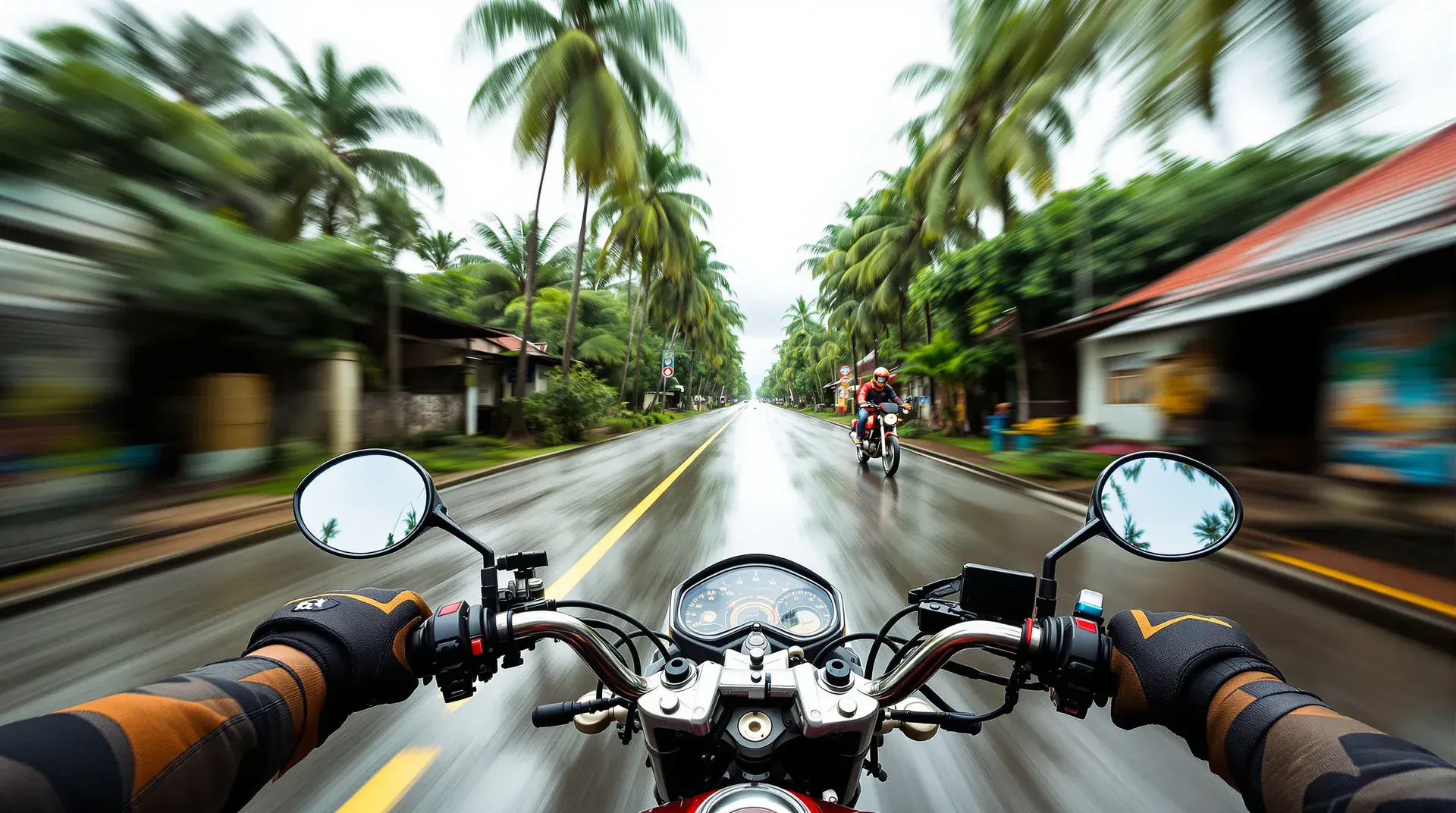
The first thing a new arrival notices about Davao traffic is that it moves.
The second thing, usually about four minutes later, is that a taxi driver has just been overtaken by a pedestrian and appears entirely untroubled by it. Davao City runs a 30 kilometre per hour speed limit through its downtown, rising to 40 on a handful of named corridors, and it enforces it. In a country where the general road culture is best described as improvisational, that is a striking thing, and it is one of the more concrete pieces of evidence for the claim we make on the Davao page.
You get used to it faster than you expect. And once you do, you notice something else: you are not tense. Driving in Manila is a contact sport. Driving in Davao is a slightly slow errand. That difference is worth actual money in the quality of your week.
How long your own licence lasts
Straightforward, and widely misunderstood.
A valid foreign driving licence is generally accepted in the Philippines for the first 90 days from your date of arrival, provided it is in English or accompanied by an official translation. That is a tourist provision. It is not a residency provision, and it does not extend just because you extended your visa.
After that window, the correct document is a Philippine licence issued by the Land Transportation Office, the LTO. If you are living here on any of the long routes, whether that is the tourist extension ladder, a 13A or an SRRV, the LTO card is what you should be holding.
Getting the LTO licence, and why it is easier than you think
Here is the pleasant surprise. There are recognition arrangements between the Philippines and a long list of countries, including Germany, Austria, Switzerland, the UK and others, under which an existing licence is recognised rather than retested.
The practical consequences:
- •No new driving test. Your existing entitlement carries across.
- •You do not surrender your home licence. It stays with you.
- •A medical examination at an LTO-accredited clinic is required, and it is brief.
- •A real Philippine residential address is required, which is the part that trips people up, because it must be documentable. This is where a registered lease and a Barangay Certificate stop being paperwork and start being the thing that unlocks something, exactly as described in the Barangay Certificate piece.
We coordinate the whole LTO process for clients, including by power of attorney, which means it can be done without you standing in the queue. It is offered as an add-on to any base package and it is one of the most quietly popular things we do. The details of the service side are on our services page and in the shop.
Why a second licence is worth more than it looks
Most people think of a driving licence as permission to drive. For an internationally mobile person it is two other things as well.
It is an identity document you can carry. Nobody wants to walk around a tropical city with their passport in a pocket. The LTO card is a photo ID with your name, nationality and Philippine address on it, in English, accepted at banks, government counters and hotels. Alongside the ACR I-Card and the TIN card, it completes a set of documents that answers "who are you and where do you live" in about four seconds, which as we argued in the piece on why banks refuse foreigners is the question everything here actually turns on.
It is redundancy. European licences are time-limited now, and renewing one generally assumes a registered address in that country. For somebody who has deliberately given up their home residence, that assumption is a problem rather than a formality. A full national licence from a jurisdiction where you actually live, in English, recognised by rental desks from Dubai to Florida, removes an entire category of future annoyance. It is the same logic that makes people hold a second bank account.
The Davao rules that actually catch foreigners
The speed limit is the famous one, but it is not the one that costs people money.
Helmets, always, on any motorbike, including the passenger. This is national law and it is enforced. The habit of a short unhelmeted hop to the corner store is a habit from somewhere else.
The liquor rule. Selling and serving alcohol is prohibited citywide from 1 a.m. to 8 a.m., under an ordinance in force since 2013 that reworked a liquor ban first introduced in 1994. This is not a technicality that bars quietly ignore; it is enforced, and the city has held the line even when businesses lobby for festival exceptions. It is one of the reasons Davao at two in the morning is calm in a way that surprises visitors from Cebu or Manila.
Smoking. Davao's anti-smoking ordinance is famously strict and long predates the national law that followed it. Assume you cannot smoke anywhere indoors, and in a great many outdoor public places either.
Firecrackers, banned outright since City Ordinance 060 of 2002, which is why New Year here sounds different from anywhere else in the country.
Taken together these ordinances form a pattern, and the pattern is the point. Davao is a city that decides a thing is unsafe and then actually stops it. That single administrative habit is what produces the safety record that visitors find so hard to believe.
Should you even own a car?
For a great many foreign residents the honest answer in the first year is no.
Grab is everywhere, it is cheap, it is metered by the app, and a cross-city trip costs a couple of euros. Motorbike taxis are cheaper still. A car with a driver for a half day costs less than a taxi from most European airports to the city centre. Our cost-of-living figures put the numbers next to each other and the comparison is not close.
A car starts to make sense when you have children, when you live outside the central belt, or when you want to leave the city regularly, and Davao is a very good place to want to leave regularly: Samal Island, the coast road, the highlands towards Mount Apo, the durian country up towards Calinan.
If you do drive, two habits to adopt early. Assume every vehicle around you may change lane without signalling, because signalling here is informative rather than obligatory. And treat motorbikes as water: they will flow through any gap you leave, from any direction, and expecting otherwise is how foreigners have their first accident.
The unglamorous conclusion
A driving licence is not a strategy. But it is one of the small, concrete things that converts a legal status into an actual life. You can hold a visa and still be dependent on other people to move around. The LTO card, the local bank account, the Barangay Certificate and the ACR I-Card are the four documents that between them turn a foreigner into a resident, and each one of them opens something the others do not.
That is the whole idea behind what a real residency package contains, and it is why we treat the licence as a module of the base rather than an afterthought.
Slow down to thirty. Wear the helmet. And enjoy the fact that the drive across town is genuinely pleasant, which is not a sentence anyone writes about Manila.
Ready to build your Davao base?
Order services directly, or book a call with Tim to discuss your situation first.