8 January 2026
Nobody Tells You How Loud the First of January Is
Twelve round fruits on the table, polka dots on everything, and a plastic horn in the hand of every child in the country. Except in Davao, which does New Year differently on purpose.
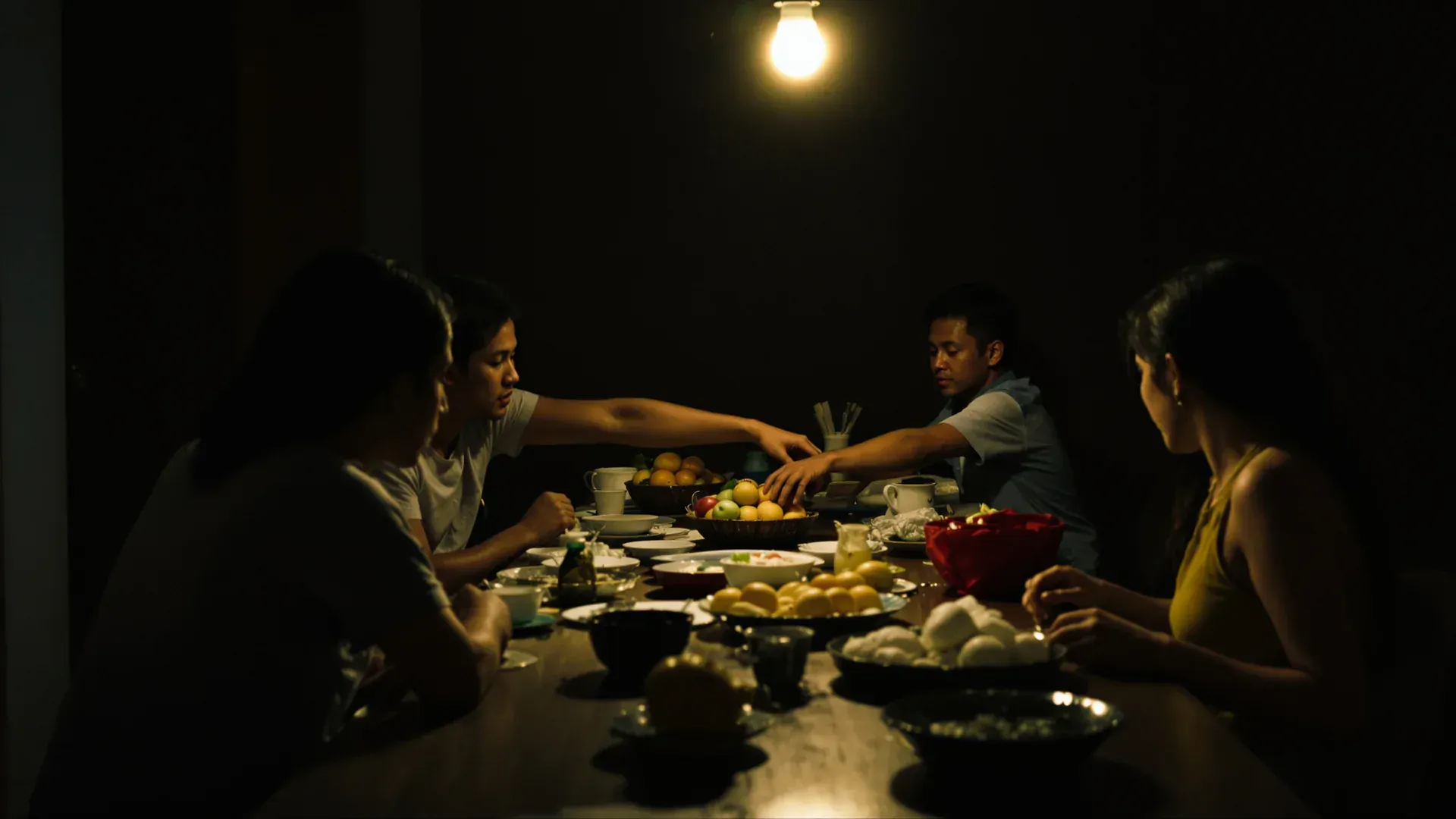
The first time you spend New Year in the Philippines, you do not sleep.
Not because you are out. Because from roughly nine in the evening the sound starts, and it does not stop, and there is no building in the country thick enough to keep it out. It is not the tidy municipal firework display of a European city, twenty minutes of choreography and then bed. It is eight hours of continuous, uncoordinated, joyful, deafening noise, produced by an entire nation simultaneously deciding that the only correct response to the passage of time is to be as loud as humanly possible.
By two in the morning you have stopped resisting. By three you are on a balcony with a warm beer, watching a city you have only just moved to detonate itself, and something has shifted in how you feel about the place.
Why the noise, specifically
The belief behind it is old and specific: noise drives away bad luck and evil spirits. Not metaphorically. The louder the household, the cleaner the year that follows. Every Filipino child knows this, and every Filipino child is therefore issued a torotot, a paper or plastic horn that produces a sound somewhere between a duck and a fire alarm, and is expected to use it without pause from dinner until they fall asleep mid-blow.
Adults handle the lower registers. Car horns. Pot lids. Anything metal against anything else metal. In the provinces, bamboo cannons. And, in most of the country, firecrackers, in quantities that would be illegal almost anywhere in Europe.
Media Noche, and the table that is doing a job
Christmas Eve has Noche Buena. New Year has Media Noche, the midnight meal, and it is the more superstitious of the two.
The table is not decorated. It is loaded, deliberately, because a full table at midnight means a full table all year. Somewhere on it there will be:
- •Twelve round fruits, one for each month. Round because coins are round and prosperity is round. Grapes, oranges, melons, apples, anything spherical, and in the last frantic days of December the price of round fruit in every market in the country does something remarkable.
- •Pancit or another long noodle, for long life. You do not cut the noodles. Cutting them is cutting the life.
- •Something sticky. Rice cakes, biko, bibingka. Sticky food makes good fortune stick to the household.
- •Rice bins and wallets filled rather than empty at the stroke of midnight, because the state of the house at midnight sets the state of the house for the year.
Nobody at the table believes all of it literally. Everybody does all of it anyway. Ask a Filipino friend whether the twelve fruits work and you will get a shrug and a grin and the answer *it does not cost anything to be sure*, which is possibly the most sensible theology anyone has ever offered you.
Then there are the polka dots. Round patterns on clothing, for the same reason as round fruit. On 31 December the country dresses like a 1950s film, and it is genuinely lovely.
And the jumping. At midnight, every child in the Philippines jumps as high as they can, because jumping makes you tall. If you are a foreigner over forty standing in a Filipino living room at midnight, you will be told to jump too. Jump. It is a good way to start a year.
Davao does not do the fireworks part
Here is where the country splits, and where your New Year depends entirely on your postcode.
Davao City has banned firecrackers since 2002. Not restricted. Banned. The city ordinance took the position, decades before the national conversation caught up, that the annual harvest of blown-off fingers and burned children was not an acceptable price for a tradition, and it enforced the rule the way Davao enforces rules, which is to say properly.
If you have read anything about why we are based here rather than in the capital, this will not surprise you. The firecracker ban belongs to the same family as the citywide speed limit, the liquor curfew and the smoking ordinance that eventually became the model for national law. Davao has a long, well-documented habit of deciding that a thing is unsafe and then simply stopping it, and it is precisely that habit that produces the safety record we wrote about at length.
So New Year in Davao is loud, but it is loud in a different key. Horns, music, car alarms, karaoke of a quality that varies from genuinely excellent to legally actionable, and an authorised central display rather than ten thousand private ones. You still do not sleep. You are simply much less likely to spend 1 January in an emergency room.
For a certain kind of new arrival, usually one with young children, that single ordinance does more to sell the city than any brochure. It is a small, concrete piece of evidence about how a place is run.
What to actually do on your first one
Some practical notes, from people who got this wrong before they got it right.
Get invited. Filipino New Year is a household event, not a public one. A restaurant on 31 December will be quiet or shut. The entire country is in somebody's living room. If a colleague, a neighbour, your landlord or your partner's family invites you, cancel whatever else you had planned. The invitation is the whole thing. You will eat too much, you will be introduced to nineteen relatives whose names you will not retain, and you will be handed a microphone.
Bring something. Not wine. Bring food, or a large bottle of something, or a fruit basket. The correct instinct is abundance.
Expect to be asked about money. Not aggressively. But in a culture where a full table at midnight is a statement of intent for the coming year, questions about your salary, your rent and your plans are not rude. They are conversation. If you find that jarring, you are not alone, and it is worth understanding what a Filipino family reads into those questions before you form an opinion about it.
Take the first week of January off, mentally. The country does not fully restart until the second week. Government offices are technically open and functionally slow. Which matters, because the Bureau of Immigration Annual Report window opens on 1 January, and if you are a registered foreign national you have until 1 March to be counted. Doing it in the first fortnight, before everyone else remembers, is one of the few genuinely clever things you can do in January. We explained why that deadline has teeth in the last piece.
And one thing you will not expect
Around three or four in the morning, the noise finally thins out. Not stops. Thins.
And into that gap comes a sound you have not heard in Europe for a very long time: people talking on the street. Neighbours who have been up all night, still out, still going, in no hurry to be anywhere. Somebody's speaker still playing. A dog that has given up complaining. The particular warmth of tropical air at four in the morning, which is the same temperature as your skin and therefore feels like nothing at all.
That is the moment most people we know decided they had actually moved, rather than merely relocated. Not the visa. Not the condo. A street at four in the morning on the first of January, full of people who were not going home because they already were.
If that is the version of a year you would like to have, the practical route to it is unglamorous and entirely learnable. Start with why Davao, then look at what setting up here actually involves.
Ready to build your Davao base?
Order services directly, or book a call with Tim to discuss your situation first.