9 July 2026
Twenty Storms a Year Enter This Country. Almost None of Them Come Here.
It is the single most persuasive geographic fact about Davao, and it is also the one most often overstated. Here is the honest version, including the storms that did arrive.
Somebody always asks about typhoons, usually within four minutes of hearing that you live in the Philippines.
The answer is genuinely good news, and it is worth giving carefully, because the version most people repeat is a small overclaim and small overclaims are how trust gets lost.
The geography, first
Around twenty tropical cyclones enter the Philippine Area of Responsibility each year, and something like eight or nine of them make landfall. That is one of the highest exposures of any country on earth, and it is the single largest natural hazard the Philippines faces.
But those storms are not distributed evenly across the archipelago. They form in the western Pacific and track west and north-west. The great majority of them cross Luzon and the Visayas, which is why the storms you have heard of, the ones that made international news, hit Tacloban, Samar, Bicol and northern Luzon.
Davao City sits in south-eastern Mindanao, well below the corridor most storms travel through. In a normal year, and in most abnormal ones, the tropical cyclone season is something Davao watches on television.
That is not luck. It is latitude. And it is one of the reasons a genuinely large number of businesses, families and institutions have concentrated here, and one of the honest reasons we chose this city rather than the capital, as set out in Davao City vs Manila.
Now the part that gets left out
Mindanao is not immune, and pretending otherwise is dishonest.
In December 2012, Typhoon Bopha, known locally as Pablo, made landfall in Davao Oriental, the province immediately to the north-east of Davao City. It was the most destructive storm to strike Mindanao in living memory. It devastated Davao Oriental and what was then Compostela Valley, killed a very large number of people, and destroyed agricultural livelihoods across a wide area. Anyone in Davao at the time remembers it.
The year before, in December 2011, Tropical Storm Washi, known locally as Sendong, caused catastrophic flash flooding in Cagayan de Oro and Iligan in northern Mindanao. It was not a powerful storm by wind measure. It was a rainfall event over unprepared river systems at night, and the death toll was in the thousands.
Two lessons sit in those events, and both matter for anyone planning to live here.
First: rarely on the track is not the same as never. The correct claim about Davao is that its statistical exposure is dramatically lower than Luzon's, not that it is outside the weather.
Second: the killer is almost always water, not wind. Flash flooding, river surge and landslides do far more damage in this country than wind speed does. Which means the practical question when you choose where to live is not "how strong are the storms here" but "what happens to this specific street when it rains for eighteen hours".
The rainfall pattern, which surprises Europeans
Davao does not have a dry season and a wet season in the way Thailand or northern Luzon does.
Under the Philippine climate classification, the Davao area falls into the type with rainfall distributed more or less evenly throughout the year, with no pronounced maximum and no dry season. There is more rain in some months than others, but the enormous seasonal swing that dominates life in much of Southeast Asia is simply absent here.
What that means day to day:
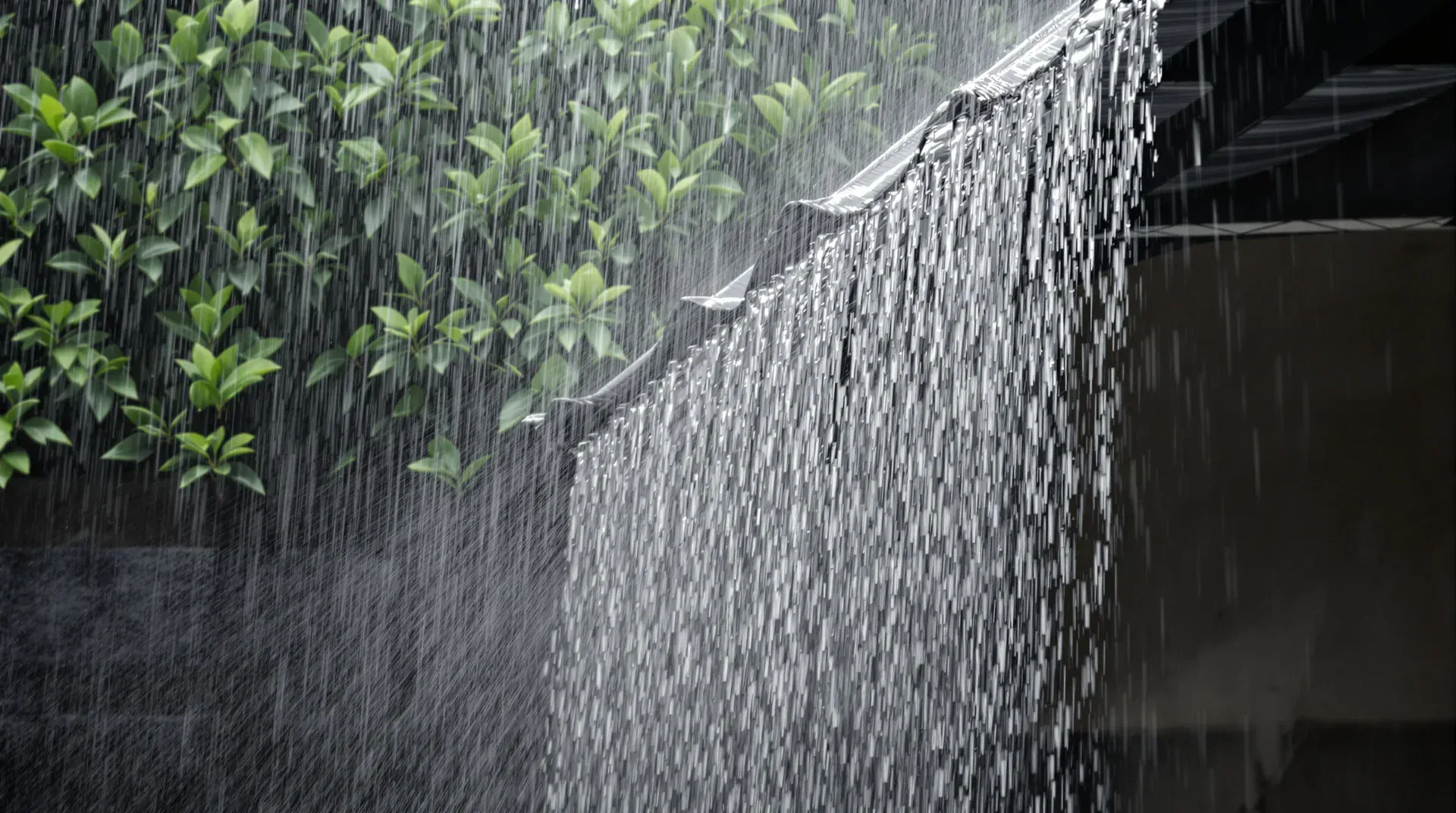
- •It rains hard and then it stops. The characteristic Davao rain is a sudden, vertical, extremely heavy downpour lasting thirty to ninety minutes, followed by sunshine and steam. It is not Northern European drizzle and it does not settle in for a week.
- •You will get caught. Everybody does. Carry a small umbrella and stop caring.
- •Traffic and flooding are local. Some junctions in the city flood reliably in a heavy downpour and drain within the hour. Knowing which ones is a piece of neighbourhood knowledge you acquire in your first rainy month, and it is exactly the sort of thing our neighbourhood guide exists to shortcut.
- •The temperature barely moves. Rain or shine, the year runs in a narrow warm band. There is no cold season, no heating bill, and no seasonal energy spike, which is why the power bill piece is entirely about cooling.
The other hazard nobody mentions
Mindanao is seismically active. In October 2019, a sequence of strong earthquakes centred in Cotabato province shook Davao City hard enough to empty office towers and malls, and caused serious structural damage in towns to the south-west of the city, including a fatal building collapse in Davao del Sur.
Davao is not on the same fault system as Manila, and Philippine building codes for high-rise construction are genuinely seismic codes. But if you are buying or renting on a high floor, the age and construction standard of the building is a real question, and it is a better one than the view.
The practical version of all this
Six things, in order of how much they matter.
Where you live matters more than what the weather does. Elevation, drainage and distance from a river channel decide almost everything about flood exposure, and those vary street by street in this city. Ask what happened here in the last big rain. Somebody will tell you honestly.
Know your building's water and power behaviour. Generator coverage, water pump behaviour during an outage, and whether the lifts run. Covered in the power piece, and worth asking at viewing.
Keep a week of water and a charged power bank. Not survivalism. Ordinary tropical housekeeping.
Follow PAGASA rather than international forecasts. The Philippine weather bureau names storms locally and issues the signal warnings that schools, offices and ferries actually act on. An international app will tell you a storm exists. PAGASA tells you what the country is going to do about it.
Ferries stop before you expect them to. If a storm is anywhere in the region, sea travel to Samal and the smaller islands is suspended early and correctly. Do not plan a tight connection around a boat in an unsettled week.
Insurance. Condominium buildings carry their own cover for the structure, which is one of the questions worth asking before you buy anything on the property side. Your contents and your liability are your problem, and cover is cheap here.
What a storm signal actually means to your week
Worth knowing before the first one, because the country reacts in a very organised way and foreigners tend to react in an unorganised one.
PAGASA issues tropical cyclone wind signals, numbered upward with the expected wind. Those numbers are not weather commentary. They are triggers. Local governments suspend classes at defined levels, government offices follow, the coast guard grounds vessels, and airlines start cancelling before the sky looks like anything at all.
So the sequence of a storm week in a place that is affected looks like this: an announcement the evening before, schools suspended by seven in the morning, supermarkets busy by nine, ferries stopped by noon, and then a day at home. It is orderly, it is well practised, and the country is genuinely good at it, having had a great deal of practice.
For Davao residents, the version you will actually experience most years is milder: heavy rain from the outer bands of something passing well to the north, a wet day, and a lot of messages from relatives abroad who have seen a map on the news and assumed the worst.
The honest summary
If your worry about the Philippines is typhoons, then Davao is close to the best answer the country has, and that is a real, checkable geographic fact rather than a marketing line.
If your expectation is that living here means never thinking about weather, that is wrong too. This is a tropical archipelago on the Pacific rim. It rains enormously, the ground moves occasionally, and once in a decade something serious comes far enough south to matter.
What Davao offers is not the absence of nature. It is a place where the odds are meaningfully better than almost anywhere else in the country, in a city that has shown, on the safety question and elsewhere, that it takes practical risk seriously.
That combination is most of the argument on why Davao, and the rest of it is the fruit.
Ready to build your Davao base?
Order services directly, or book a call with Tim to discuss your situation first.