11 June 2026
The Mosquito That Bites in the Afternoon
Most health advice about the tropics is written by people who visited for a fortnight. Here is what actually matters when you live in Davao, and what you can safely stop worrying about.
There are two ways to be wrong about health in the tropics.
The first is the anxious way: bottled water for brushing teeth, no street food ever, a course of antibiotics in the suitcase, and three years of eating in hotel restaurants. This person is miserable and no healthier than anyone else.
The second is the careless way: a shrug, a bag of ice from an unmarked cooler, no repellent, and then a week in a private room at Davao Doctors with a platelet count somebody is watching hourly.
The useful position is in between, and it is narrower than either group thinks.
Dengue is the one that actually matters
Not malaria. Malaria is a genuine concern in some remote parts of Mindanao and is not a meaningful risk in urban Davao. Dengue is different. It is endemic across the Philippines, it is present in cities rather than jungles, and it is the mosquito-borne disease that puts foreign residents in hospital here.
Three things about it that people from temperate countries consistently get wrong:
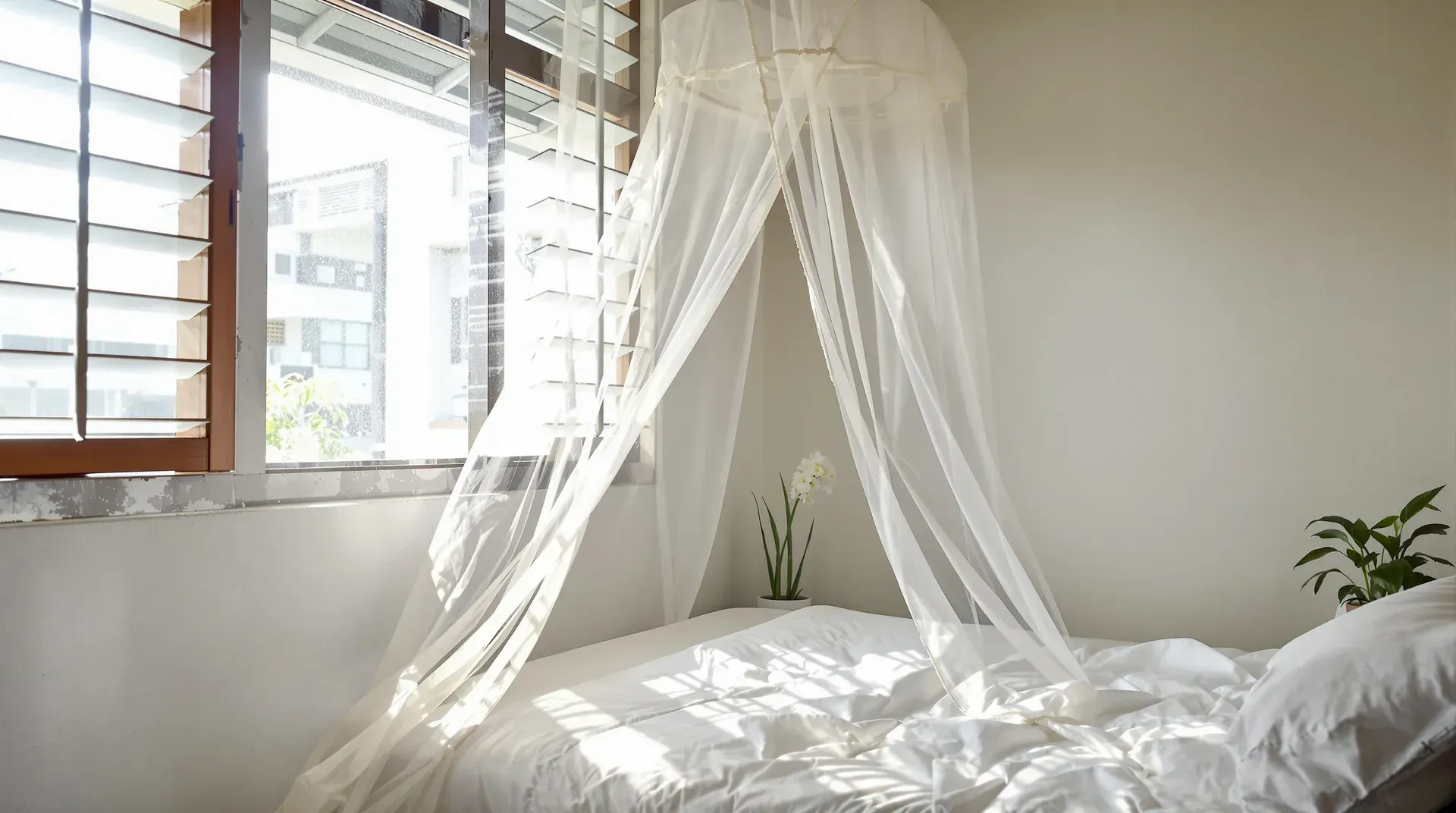
The mosquito bites during the day. Aedes aegypti is a daytime feeder, most active in the hours after dawn and before dusk. The whole mental model of "mosquitoes at night, so a net over the bed" is imported from a different disease and does almost nothing here.
It breeds in clean water, in tiny amounts, close to the house. Not in swamps. In a plant saucer, a bottle cap, a blocked gutter, a bucket on a balcony, the water tray under an air conditioner. The single most effective anti-dengue measure available to you is walking around your own property once a week and tipping things out. That is not folk advice, it is the core of every public health campaign the Department of Health runs.
Second infections are the dangerous ones. There are multiple dengue serotypes. A first infection is usually a wretched week of fever, bone-deep aches and exhaustion. A later infection with a different serotype carries a meaningfully higher risk of the severe form. This matters for people who live here for years rather than visiting.
What to do about it, in order of effectiveness: empty standing water weekly, use repellent in the morning and late afternoon rather than at night, screen the windows you leave open, and if you get a sudden high fever with severe muscle and joint pain, go and get a blood test on day two rather than waiting it out. Dengue has no specific treatment, but management matters enormously and the danger window is when the fever breaks, not when it peaks.
The water, which is a better story than you expect
Here is one of the genuinely pleasant surprises about this city.
Davao's water supply is unusually good by Philippine standards. The city water district draws heavily on deep wells and springs rather than surface water, and the utility maintains that what comes out of the tap meets drinking standards. Plenty of locals drink it. That is not a claim you can make about most Philippine cities.
Most foreign residents, and most middle-class Filipino households, still drink purified refill water from the blue five-gallon containers that get delivered to your door for a few dozen pesos. Partly habit, partly because the pipes inside an older building are a separate question from the water entering it, and partly because it costs almost nothing.
The sensible position: cook with the tap, drink the refill, and stop thinking about it. It is one of the quieter arguments on the Davao page. Brushing your teeth with tap water in Davao is not the risk your guidebook thinks it is.
Ice, similarly. Commercial ice in malls, restaurants and supermarkets is made from purified water and is fine. Ice from an unmarked cooler at the side of a road in a small barangay is a different proposition, and you will learn to tell the difference within a month.
Food, honestly
Street food in the Philippines is not the hazard it is made out to be, with one rule: eat where there is turnover. A grill with a queue is safer than a restaurant with none, because the meat has not been sitting.
Things worth being deliberate about:
- •Kinilaw, the raw fish cured in vinegar and calamansi, is one of the great dishes of this country and is fundamentally a question of how fresh the fish is and how clean the kitchen is. Eat it in a good place. It is worth it.
- •Balut will be offered to you, probably late at night, probably by somebody who wants to watch. It is a duck egg with a partially developed embryo, it is a protein snack rather than a dare, and it is entirely safe. Whether you like it is your business.
- •Buffets that have been standing are the actual risk in this country, in Manila and Davao alike, and they are the source of far more upset stomachs than any grill on a street corner.
- •Wash the fruit. Davao's fruit is extraordinary, the best in the Philippines, and it comes from a market rather than a plastic tray.
Expect a period of adjustment in the first month regardless of what you do. Different water, different bacteria, different everything. It passes.
Vaccinations: resident, not tourist
Traveller advice and resident advice are different, and most foreigners here are still running on the traveller version.
Worth discussing with a doctor before or shortly after you arrive: hepatitis A and B, typhoid, and tetanus kept current. Those are standard.
The one people skip is rabies pre-exposure vaccination, and living here it deserves more thought than it gets. The Philippines is rabies-endemic, free-roaming dogs are part of daily life, and children are disproportionately affected. Pre-exposure vaccination does not make a bite a non-event, but it simplifies what happens afterwards considerably and buys time, which in a country where you may be a few hours from a treatment centre is the whole point. If you have young children or you live outside the city core, take it seriously.
Japanese encephalitis is worth a conversation if you will spend significant time in rural agricultural areas.
When something does go wrong
This is where Davao earns its reputation. The city has good private hospitals, specialist consultations cost a small fraction of European or Australian equivalents, and the diagnostic infrastructure is genuinely competent. A dengue admission is unpleasant but entirely routine, handled by people who see it constantly.
What you should not do is rely on an emergency card and hope. Have proper insurance. The full picture on the hospitals, the costs and the insurance question is in the healthcare piece, and the ballpark numbers are in the cost-of-living breakdown.
The summary you can act on this weekend
Walk around your home and tip out every container holding still water. Buy repellent and keep it by the door rather than in a drawer. Order the refill water. Get the vaccination conversation done. And then eat the street food, drink the kinilaw, and stop treating the country you have chosen to live in as a hazard.
That is the whole of it. The people who thrive here are not the cautious ones and they are not the reckless ones. They are the ones who dealt with the four things that matter and then got on with living, which is roughly the argument of everything else we write.
Ready to build your Davao base?
Order services directly, or book a call with Tim to discuss your situation first.