7 May 2026
You Do Not Need to Be Fluent. You Need to Try in Public.
Everyone in Davao speaks English, which is exactly why nobody expects you to speak Bisaya, which is exactly why forty words go further here than four hundred would anywhere else.
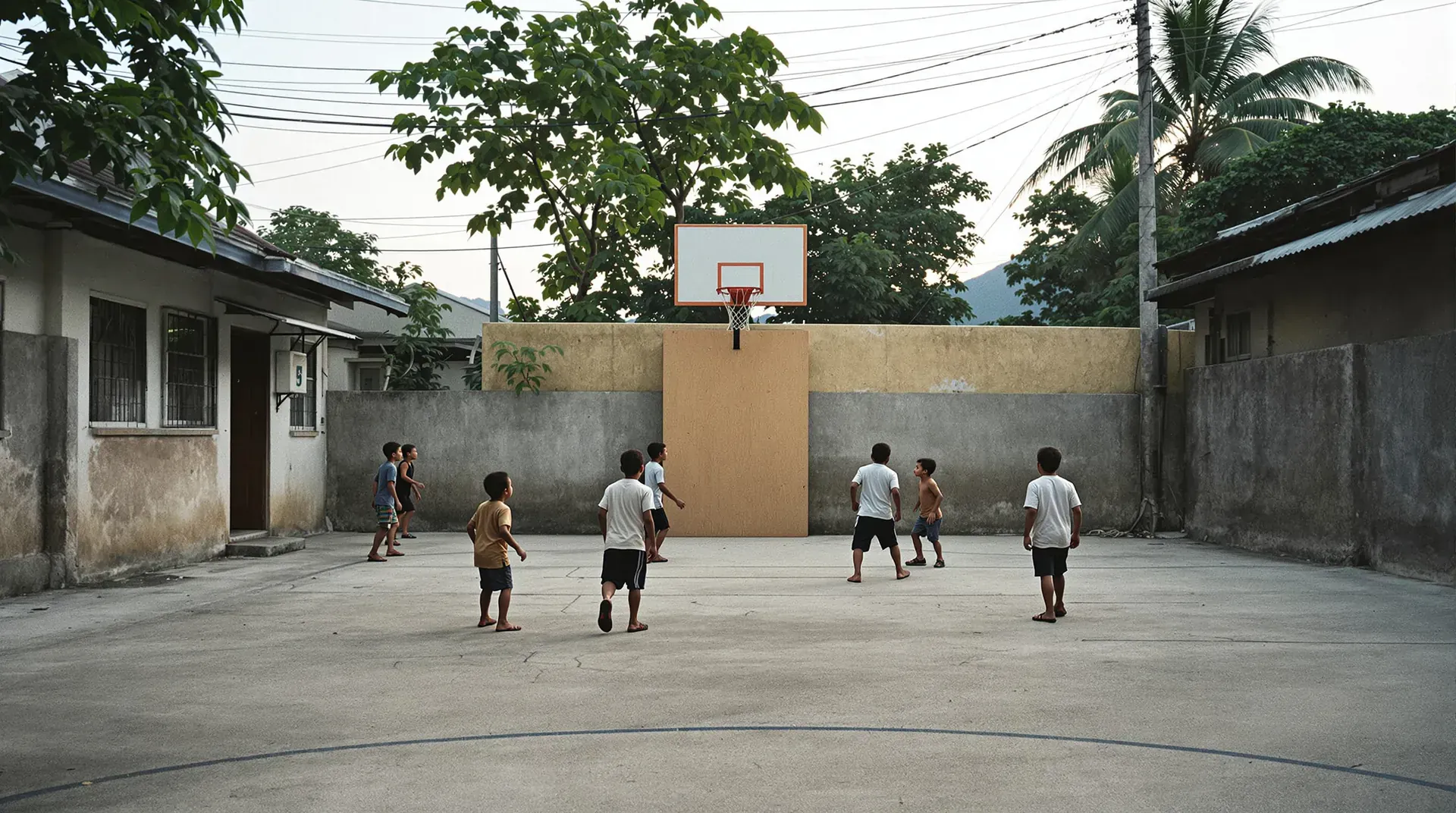
Here is the trap.
Everybody in Davao speaks English. Not phrasebook English. Real, fluent, joke-making English, delivered by a twenty-two-year-old at a mall counter who has never left Mindanao. The Philippines has one of the largest English-speaking populations on earth and it is not a tourist-facing veneer, it is the language of school, business, law and half of television.
So you never have to learn anything. And because you never have to, most foreigners never do, and they live here for a decade inside a slightly muffled version of the country, always being spoken to in the language of the outsider.
The exit from that is not fluency. It is about forty words, deployed badly, in public.
First, what language is it actually?
Not Tagalog. This confuses almost every new arrival, because Tagalog, packaged as Filipino, is the national language and the one that Manila-made media speaks.
Davao is in Mindanao, and the language of the street here is Cebuano, universally called Bisaya or Binisaya. It is the mother tongue of tens of millions of people across the Visayas and Mindanao, and in daily life around Davao it is what you will hear in the market, in the jeepney and in your neighbour's kitchen.
Davao is also unusually mixed, which softens this. It is a migration city, and Tagalog, Ilonggo and several Lumad and Moro languages are all present. Nobody will mind which one you attempt. They will mind, in the best possible way, that you attempted one at all.
One trap to know about immediately: the Tagalog politeness particles "po" and "opo" are not Bisaya. You will hear them here, because Tagalog speakers use them and because television has spread them, but sprinkling "po" through Bisaya marks you as someone who learned from a Manila app. Bisaya carries respect differently, through the use of manong and manang for older men and women, kuya and ate for slightly older ones, and through tone.
The forty words, in the order you will need them
Do not study these. Use them badly.
Greetings and basic courtesy - Maayong buntag (good morning), maayong hapon (good afternoon), maayong gabii (good evening) - Kumusta? (how are you) - Salamat (thank you), daghang salamat (many thanks) - Palihug (please) - Walay sapayan (you are welcome) - Oo (yes), dili (no, for things), wala (none, there is not) - Pasaylo-a ko (sorry, excuse me)
In a shop, market or tricycle - Pila? (how much) - Mahal (expensive), barato (cheap) - Gamay (small), dako (big) - Naa (there is), wala (there is not) - Asa? (where), unsa? (what), kanus-a? (when), kinsa? (who) - Diri (here), didto (there) - Hinay (slow), paspas (fast) - Ayaw (do not) - Pwede? (may I, is it possible)
At the table, which is where the real progress happens - Lami! (delicious, and this single word will earn you more goodwill than any other) - Kaon ta (let us eat) - Busog na ko (I am full) - Tubig (water) - Init (hot), bugnaw (cold) - Init kaayo (very hot, which you will say most days)
Social words that do heavy lifting - Gwapa (beautiful, of a woman), gwapo (handsome) - Bai or bay (mate, used constantly between men) - Lagi (a confirming particle, roughly "indeed", used everywhere) - Kuyaw (intense, impressive, alarming, depending entirely on tone) - Amping (take care, and the loveliest word on this list)
That is forty-odd. It will take you two weeks to be able to deploy half of them, and the return on that fortnight is disproportionate to anything else you will do in your first year.
The three words that are not on the list, and why
You will be taught them anyway, within a fortnight, usually by somebody laughing.
Kanang is a filler word, the Bisaya equivalent of "that thing", and it is used roughly once per sentence by everyone. Learning to hear it is the moment spoken Bisaya stops sounding like an undifferentiated stream and starts sounding like sentences with gaps in them.
Ka turns a statement into a question about the person you are talking to, which means half of what you want to ask is one syllable away from something you already know. Gutom ka? is "are you hungry".
And kaayo, meaning very, which attaches to everything. Lami kaayo. Init kaayo. Gwapa kaayo. It is the single most useful intensifier in the language and it makes forty words behave like eighty.
What actually changes
The first thing that changes is small and immediate. Prices in markets. Not dramatically, and not everywhere, but the "foreigner number" softens once it is clear you are not passing through. That is worth something.
The second thing is bigger. You get let into the joke.
Filipino humour runs constantly, at low volume, in the background of every interaction. Most of it is in Bisaya. When you can catch even a fragment, the shape of a room changes: people stop performing hospitality at you and start including you in the thing that was already happening. Your neighbour's teenage son will start correcting your pronunciation, which is a sign of acceptance and not of rudeness.
The third thing is the one nobody expects. The people you live among stop having to work for you. Every conversation you have in English is a conversation where the other person is doing all the accommodating. They do it cheerfully. They have done it their whole lives. But the day you take half of that load back is the day something evens out.
How to actually learn it
Not from an app, mostly. Bisaya has thinner app coverage than Tagalog, and the apps that exist are aimed at Cebu.
What works here:
Your helper, your neighbour, the guard at your building. The people a real base puts around you anyway. Ask for one word a day and use it the next day. People are delighted to teach. The guard at the gate who tells you the word for rain will remember that he did.
Repeat what you hear, immediately, out loud. You will be wrong. Being wrong out loud is the entire method. Filipinos are the most forgiving audience on earth for a badly pronounced attempt, and they will not correct you unkindly.
Sing. Karaoke is not optional here and it is a language lab with a sound system. You will learn more from murdering one Bisaya song at a family party than from a month of study.
Do not aim for grammar. Bisaya verb affixes are genuinely difficult and you do not need them yet. Nouns, questions, food words and courtesy will carry you for a year.
The part that matters more than the language
There is a version of the foreigner in Asia who has been here fifteen years and speaks nothing, whose entire social world is other foreigners, and who has opinions about the country delivered with total confidence and no access. You have met him. He is unhappy in a way he cannot name.
The forty words are not really about communication. They are a public statement that you consider yourself a participant rather than a customer, and in a culture that reads social signals as carefully as this one does, that statement is received instantly.
It is the same principle that runs through everything we write about building a life here rather than a paper position: why local presence matters, why a Filipino family reads your behaviour rather than your words, and why the people who thrive here are the ones who showed up.
Start with salamat and lami. Say them today, to somebody who did not expect it, and watch what happens to their face.
Amping.
If you are still working out whether Davao is your city at all, the neighbourhood guide and why Davao are the places to start.
Ready to build your Davao base?
Order services directly, or book a call with Tim to discuss your situation first.